
REVIEW · CHEESE MAKING WORKSHOPS
Visit to the property and wine/cheese pairing workshop
Wine makes more sense beside cheese. At Château Cruzeau, you visit a five-generation family property near Saint-Émilion and Pomerol, then follow the wine from vine to barrel before tasting three wines with three French cheeses. I especially like the personal family welcome and the clear look at how wine changes from harvest to bottle. The $21 price also gives you a lot for two hours.
The main consideration is that this is a focused vineyard visit, not a grand château tour with a long list of extras. You spend about 90 minutes touring the property and production spaces, so it suits you best if you want an informal, educational tasting rather than a full-day wine program.
Key points at a glance
- A five-generation family estate: Château Cruzeau is managed by the Luquot family at a 12-hectare property.
- A useful Saint-Émilion location: The vineyard sits in the Saint-Émilion Grand Cru appellation near the border with Pomerol, in Libourne.
- Wine from vine to bottle: You visit the vineyards, vat room, and barrel cellar to understand the full production cycle.
- Three wines and three cheeses: The final tasting turns French pairing theory into something you can taste for yourself.
- A personal guide: Jessica, who runs the estate with her husband, has led visits praised for clear explanations and warm hospitality.
- Good practical flexibility: The two-hour visit is offered in French or English, is wheelchair accessible, and allows cancellation up to 24 hours before departure.
Why Château Cruzeau feels different from a standard tasting
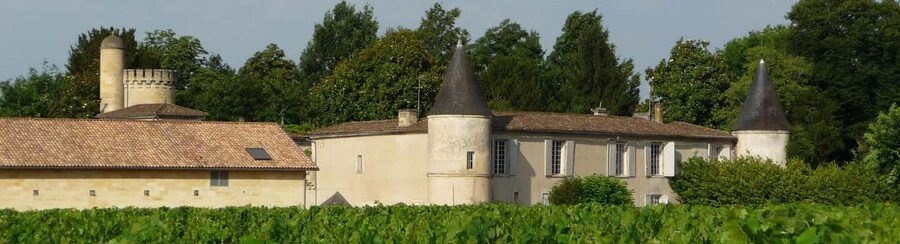
Many Bordeaux visits can feel polished but distant. Château Cruzeau offers a more direct look at a working family property, which matters if you want to understand the people behind the bottle as well as the wine itself.
The Luquot family has managed the estate for five generations. That detail gives the visit a useful human scale. You are not simply hearing a generic explanation of Bordeaux wine. You are learning about one family’s property, its methods, and its place in the Saint-Émilion Grand Cru appellation.
I also like the setting. The 12-hectare vineyard lies in the Libourne area, near the border between Saint-Émilion and Pomerol. Those names carry weight in Bordeaux, but the visit is not built around showing off famous labels. Instead, it explains how a family estate works within this well-known wine region.
Past visitors have especially praised the welcome from the owners. Jessica, who manages the property with her husband, has been singled out for her clear explanations, patience, and passion for the estate. That personal contact is a major reason to choose this visit over a more standardized cellar stop.
More Cheese Making Workshops in France
- Paris Cheesemaking Workshop including Wine and Cheese Tasting with an Expert
★ 5.0 · 141 reviews - Dijon: Cheese and Burgundy Wine Tasting Workshop
★ 4.8 · 122 reviews - Paris: Butter and Cheesemaking Workshop
★ 4.9 · 103 reviews
Starting at 152 Avenue de l’Épinette
The meeting point is the property reception at 152 Avenue de l’Épinette. The visit begins and ends there, so you do not need to manage a complicated transfer between separate parts of the experience.
The total duration is two hours. That is long enough to see the property and understand the main stages of production, but short enough to fit into a day exploring the Saint-Émilion and Libourne area. If you are building a busy Bordeaux itinerary, this compact timing is useful.
You should check the available starting times before booking. The activity does not give one fixed departure hour, so your schedule will depend on the date and current availability.
The meeting point is listed as wheelchair accessible. English and French are available, which makes the visit practical for international visitors. If you have specific mobility needs, it is still sensible to confirm details before arrival, since vineyard surfaces and cellar access can vary.
Walking through the vineyards
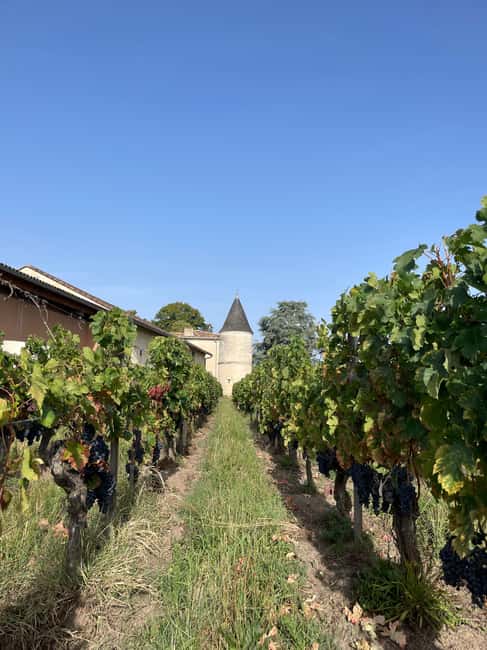
The first part of the visit takes you into the vineyard. This is where the property’s philosophy and growing practices are introduced.
You will not simply see rows of vines and move on. The vineyard stop gives context to everything that follows. Wine begins with the work carried out among the vines, so this is the point where you start to connect the final bottle with the land, the plants, and the decisions made by the family.
The 12-hectare size is worth noting. It is large enough to be a serious wine estate, but small enough for the family-run character to remain central. You are visiting a property with a clear identity, not a vast industrial operation.
The tour also helps you understand why the location matters. Château Cruzeau is in the Saint-Émilion Grand Cru appellation, close to Pomerol, two of Bordeaux’s best-known wine areas. The visit does not promise a technical lecture on every local soil type or grape variety, so you should not expect an advanced viticulture course. Instead, it offers a grounded introduction to how this particular estate approaches its vineyards.
I would pay close attention here and ask questions. The small family setting appears to be one of the visit’s strongest features, and the guide’s explanations are intended to be conversational rather than rushed.
Following the transformation in the vat room
After the vineyard, the tour moves into the vat room. This is where the visit shifts from growing grapes to making wine.
The key benefit is that you follow the wine transformation cycle in order. You begin with the vineyard, then see the spaces connected with production, and later reach the barrels and tasting table. That sequence makes the process easier to follow than a tasting alone.
For many people, wine terms can become a blur. The vat room gives those terms a physical setting. You can see where the wine is handled after the harvest and ask how the process moves toward aging and bottling.
The tour is not presented as a formal winemaking class, and the supplied details do not specify every technique used at the estate. That is a useful boundary to keep in mind. You are getting an introduction to the cycle, not a detailed production manual.
Still, this section adds real value. If you have ever tasted Bordeaux wine without knowing what happens before it reaches the glass, the vat room helps fill in the missing steps. It also makes the final tasting more meaningful because you have seen the stages that shape the finished wine.
More Wine and Cheese Tastings in France
- Paris: Montmartre Cheese, Wine & Pastry Guided Walking Tour
★ 4.8 · 2,255 reviews - Private Montmartre Food Tour with Wine, Cheese & Pastries
★ 5.0 · 1,027 reviews - Paris Le Marais Food Tour With 10+ Tastings, Cheese, Wine & More
★ 5.0 · 985 reviews - Paris: Wine and Cheese Lunch
★ 4.9 · 596 reviews
Seeing the barrels and the road to bottling
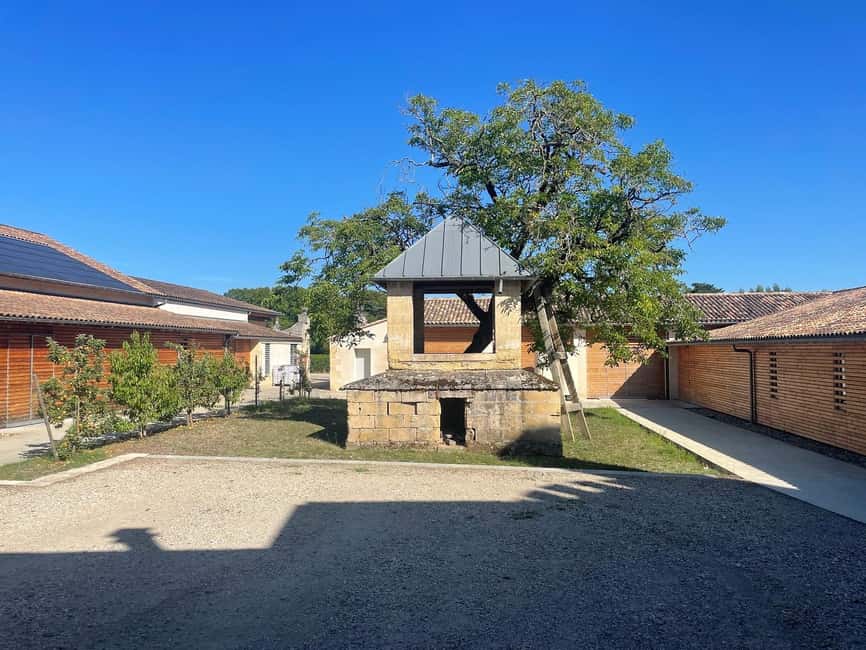
The barrel cellar continues the story. Here, you learn how the wine progresses after the earlier production stages and before bottling.
I like this part because it keeps the visit tied to real work. You are not only hearing about wine in abstract terms. You are moving through the places where the estate’s wines are transformed and stored.
The focus remains on the full cycle from harvest to bottle. That broad view is especially helpful if this is your first vineyard tour. You come away with a simple framework: the vineyard provides the grapes, the vat room handles the next stage, the barrels support the wine’s development, and bottling completes the process.
The cellar portion may be less exciting for children or for anyone who wants only a quick tasting. It is a working explanation, not a theatrical show. I would choose this activity because I want that background, not because I expect elaborate displays or a large museum-style property.
Three Bordeaux wines with three French cheeses
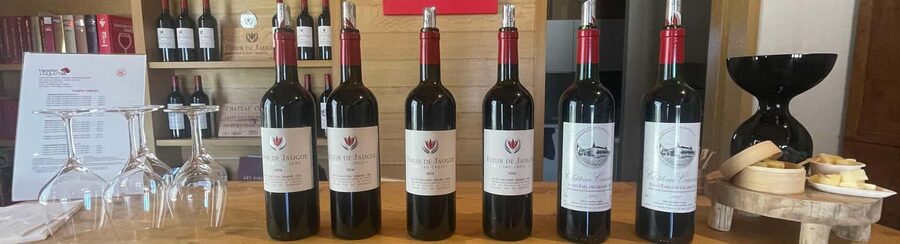
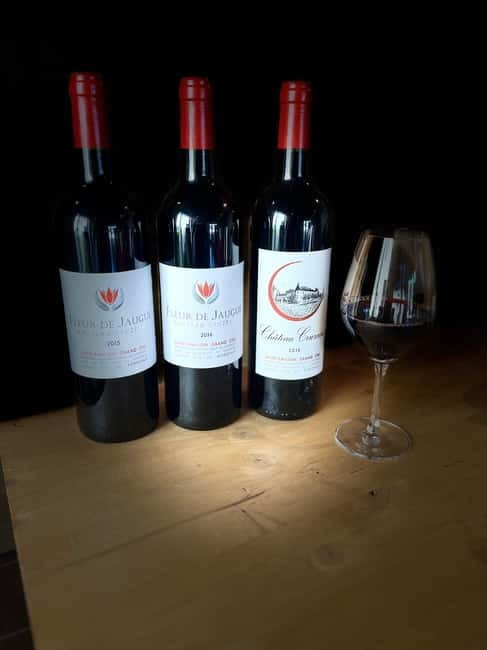
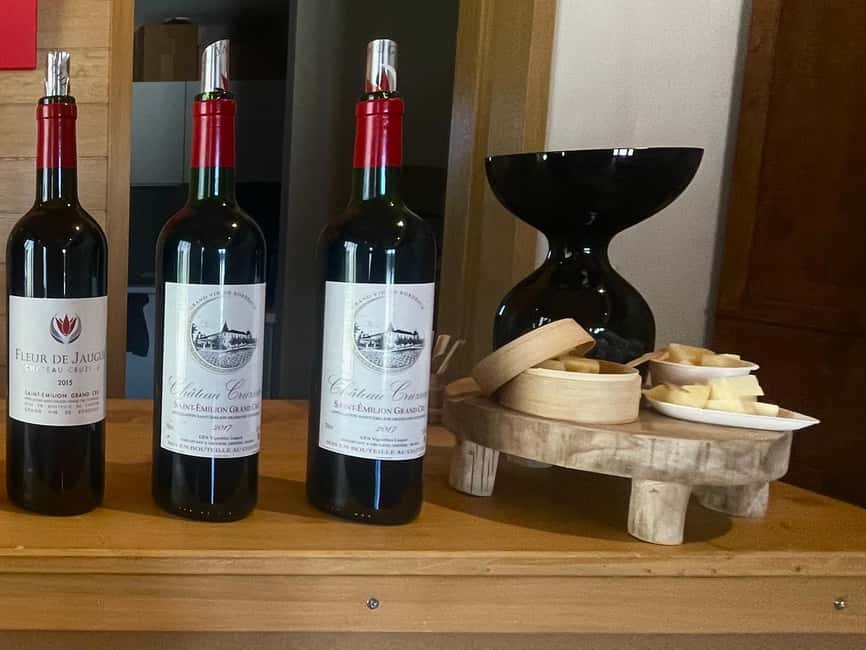
The visit ends with the tasting workshop, featuring three red wines and three French cheeses. This is the most social part of the experience, and it gives the tour a clear finish.
The pairing format is simple and effective. You taste the wines with selected cheeses, then notice how the food changes the wine and how the wine changes the food. For someone new to French wine, this is more useful than being handed three glasses without any guidance.
The cheese selection is designed to introduce pairing ideas rather than provide a full meal. You should plan to eat beforehand if you need lunch or dinner. The included tasting is a workshop and tasting session, not a restaurant service.
The feedback about this part is especially strong. People have praised the match between the wines and cheeses, and several have described the tasting as both enjoyable and instructive. That combination matters. A pairing can be technically interesting but dull, or delicious but unexplained. Here, the aim is to give you both pleasure and a little practical understanding.
The three-wine format is also a good size. You get enough comparison to notice differences without turning a two-hour visit into an exhausting drinking session. If you are sensitive to alcohol, remember that the tasting includes three red wines, and the tour is designed around sampling rather than drinking large pours.
What makes the guiding personal
The guide can speak French or English. That alone makes the experience easier for international visitors, but the stronger point is the family connection.
Jessica has led visits herself and has been praised for her clear, patient explanations. She manages the property with her husband, and that gives the tour an owner-led feel. You can ask questions about the estate and winemaking without passing through several layers of staff.
The tone appears warm and informal. One French visitor described the owner’s kindness as exceptional, while another praised the way the family story and professional know-how came through during the visit. An Irish visitor in a small group of three found there was plenty of room for questions.
Group size can vary, so you should not assume every departure will be private or tiny. Still, the available feedback suggests that the visit can feel personal, especially when the group is small. If you prefer a quiet experience, consider choosing an off-peak date when possible, though no guaranteed group size is provided.
Is $21 a good value?
At $21 per person, I consider this strong value for a two-hour experience in the Saint-Émilion area.
The price includes the property visit, vineyard and production tour, wine and cheese workshop, and three wine tastings with three French cheeses. You are paying for more than a flight of wine. The tour adds the estate story and the production cycle, which gives the tasting a proper setting.
The value is strongest for first-time wine visitors and for anyone who wants a family connection. You get a look at the vineyard, vat room, and barrel cellar, then sit down to compare the wines with food.
The price may feel less attractive if you already know Bordeaux well and want a long, technical discussion about vintages, soil, or advanced cellar methods. The information provided points to a friendly introduction rather than a specialist masterclass.
Even so, the owner-led approach adds something that many low-cost tastings lack. You are not simply buying three samples. You are buying access to a working family property and the chance to ask questions in a setting that feels direct and personal.
Who should book this vineyard visit?
I would recommend Château Cruzeau to you if you want:
- A short and affordable Bordeaux wine experience
- A family-run estate rather than a large commercial attraction
- A clear introduction to the path from grape to bottle
- A tasting that includes food pairings
- English-language guiding in addition to French
- A visit that can fit into a wider Saint-Émilion or Libourne day
It is also a good choice for couples, small groups, and curious beginners. The cheese pairing gives non-experts an easy way into wine tasting, while the vineyard and cellar tour provide enough substance to keep the visit from feeling like a quick drink stop.
I would be more cautious if you want an extensive estate tour, a full meal, or a highly technical look at Bordeaux winemaking. The experience lasts two hours and stays focused on one property, three wines, and three cheeses.
The activity is wheelchair accessible, and you can cancel up to 24 hours before the start for a full refund. A reserve-now, pay-later option is also available, which helps if your plans around Bordeaux are still shifting.
My verdict on Château Cruzeau
I would book this visit if I wanted an affordable, personal introduction to Bordeaux wine. The strongest reasons are the five-generation family connection, the chance to see the production cycle in order, and the thoughtful wine and cheese tasting at the end.
The main limit is scope. This is not a grand tour of several estates, and it does not promise a full meal or advanced wine qualification. But that narrow focus is also its strength. In two hours, you get a friendly look at one family property and a practical lesson in how French wine and cheese work together.
For $21, Château Cruzeau offers a lot of genuine contact with the people and work behind the bottle. If you value warmth, clear explanations, and a tasting with a purpose, this is an easy choice near Saint-Émilion.
FAQ
Where does the Château Cruzeau visit begin?
The meeting point is the property reception at 152 Avenue de l’Épinette.
How long does the experience last?
The full experience lasts two hours. The guided property tour is listed as approximately one and a half hours.
What does the visit include?
It includes a visit to the property, a wine and cheese pairing workshop, and a tasting of three wines with three French cheeses.
How many wines are included?
You taste three red wines during the final pairing session.
How many cheeses are included?
The tasting includes three French cheeses.
Is the tour offered in English?
Yes. The live guide can conduct the experience in English or French.
Is the activity wheelchair accessible?
Yes, the activity is listed as wheelchair accessible.
Does the tour visit the vineyards?
Yes. The visit includes time in the vineyards to discuss the estate’s philosophy and growing practices.
Will I see where the wine is made and stored?
Yes. The tour includes the vat room and barrel cellar, with an explanation of the wine’s path from harvest to bottling.
Can I cancel for a refund?
You can cancel up to 24 hours in advance for a full refund. A reserve-now, pay-later option is also available.
Just added around France
- Wine Masterclass & Cheese Tasting Workshop in Bordeaux★ 5.0 · 2 reviews
- Paris: Wine and Cheese Pairing★ 5.0 · 4 reviews
- Wine, Cheese and Charcuterie tasting★ 4.9 · 17 reviews
- Wine and Cheese experience★ 4.5 · 18 reviews
- Cheese food-tour through downtown Toulouse★ 4.5 · 7 reviews
- Wine and Cheese Tasting★ 4.5 · 17 reviews
- Paris Wine and Cheese Tastings Class near Le Marais★ 5.0 · 4 reviews
- French Wine and Cheese Master Class Near the Eiffel Tower★ 5.0 · 6 reviews
Cheese Making Workshops, compared.
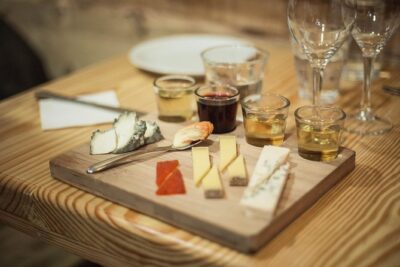
Paris Cheesemaking Workshop including Wine and Cheese Tasting with an Expert
Read our review →
Troodos Mountains Halloumi Making: All Inclusive Workshop & Tour
Read our review →
Central Madrid: Sangría Workshop & Tasting with Local Cheese
Read our review →Troodos Mountains Halloumi Making: All Inclusive Workshop & Tour
Read our review →Browse the lists this tour appears in