
REVIEW · OLIVE OIL AND CHEESE TASTINGS
From Chania: Olive Oil, Wine, Cheese & Honey Tasting Tour
Crete tastes better in the countryside. This seven-hour outing links the island’s best-known foods with rural villages, working producers, and the ancient Olive Tree of Vouves. I like the excellent value at $49, and I like that the day includes much more than wine: you taste bread, cheese, honey, olive oil, olives, tomatoes, and local wines. The main drawback is the long pickup and drop-off circuit, which can use close to an hour of your day.
The strongest part is the guide-led storytelling. Guides such as Linda and Electra have been praised for explaining Cretan farming, food customs, and local life with real warmth. I would also point out that the group can be large, so hearing every word at the winery or cheese stop may take some effort.
The six details that matter most
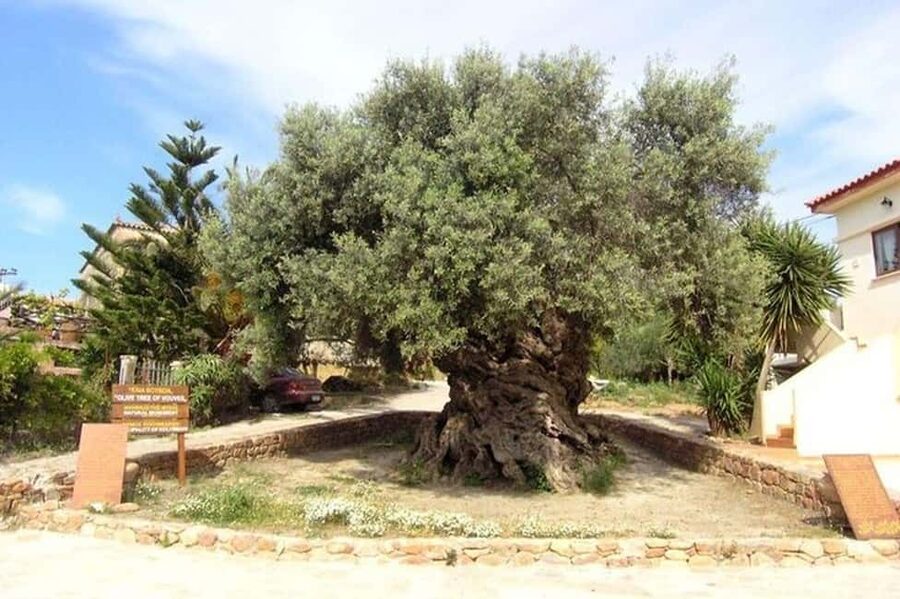
- The Olive Tree of Vouves is between 3,000 and 5,000 years old, with a remarkable hollow, twisted trunk.
- The tastings are generous, including bakery goods, cheese, honey, olive oil, olives, tomatoes, and wine.
- Pnevmatikakis Winery offers around 18 to 20 wines, with a self-service tasting format.
- The honey and olive oil stop is especially useful, since you learn how bees, hives, harvesting, pressing, and bottling fit together.
- Hotel pickup is included from many points around Chania, Platanias, Agia Marina, Maleme, Kolymvari, and nearby areas.
- The tour is a full seven hours, with about 90 minutes of coach travel each way, depending on pickup locations.
Why this $49 food tour offers strong value
At $49 per person, this is a low-cost way to reach rural parts of western Crete without renting a car. The price covers transport, a local English-speaking guide, the bakery, cheese factory, honey presentation, olive mill, winery, and a wide set of tastings.
You are not paying for one polished winery visit. You are getting a full day built around the island’s everyday food culture. That matters in Crete, where olive oil, bread, cheese, honey, and wine are not just souvenirs. They are part of how people eat, work, and welcome visitors.
The amount of food can also be surprisingly substantial. You may try local bread, rusks, savory pastries, cheeses, honey, olives, olive oil, tomatoes, and wine across several stops. Some people find the tastings filling enough to cancel or reduce their evening meal, so do not plan a large lunch immediately afterward.
There is one important qualification. The tour uses a shared coach and collects passengers from many hotels and public meeting points. The schedule is efficient once the sightseeing begins, but the morning pickup and afternoon return can feel slow. If you are staying near the first pickup point, you may enjoy a smoother day. If you are near the end of the route, expect extra waiting.
More Olive Oil and Cheese Tastings in Greece:
- Athens: Acropolis Wine Tasting with Cheese and Olives
★ 4.9 · 337 reviews - Cretan Farm Tour with Cheese-Making, Olive Oil Tasting & Picnic
★ 5.0 · 10 reviews - Farm Tour with Cheese-Making, Olive Oil Tasting & Picnic
★ 5.0 · 8 reviews
Pickup from Chania and the ride into the hills
Pickup is available from a long list of hotels, cafes, supermarkets, bus stops, and resort areas around Chania. Your booking confirmation provides the exact meeting time and the name or identification of the bus, so read that information carefully rather than waiting outside your hotel at a guess.
The air-conditioned coach is a practical choice for this route. The trip reaches rural areas and includes narrow, twisting mountain roads. Several guides and drivers received especially warm praise, including Linda, Marco, Nikos, Theo, Christos, and Stavros. The driving is an important part of the experience because you can relax and watch the villages, olive groves, and mountain views instead of concentrating on the road.
The total bus time is listed as about three hours, split between the outbound and return journeys. In practice, the pickup circuit may add time. The guide usually fills the drive with information about Crete, farming, food, traditions, and the places you are passing, which makes the coach ride feel less like dead time.
Large groups are possible. That keeps the cost down, but it can make it harder to hear during presentations. Sit near the guide when you can, and move closer to the speaker at busy stops.
Vouves and its ancient olive tree
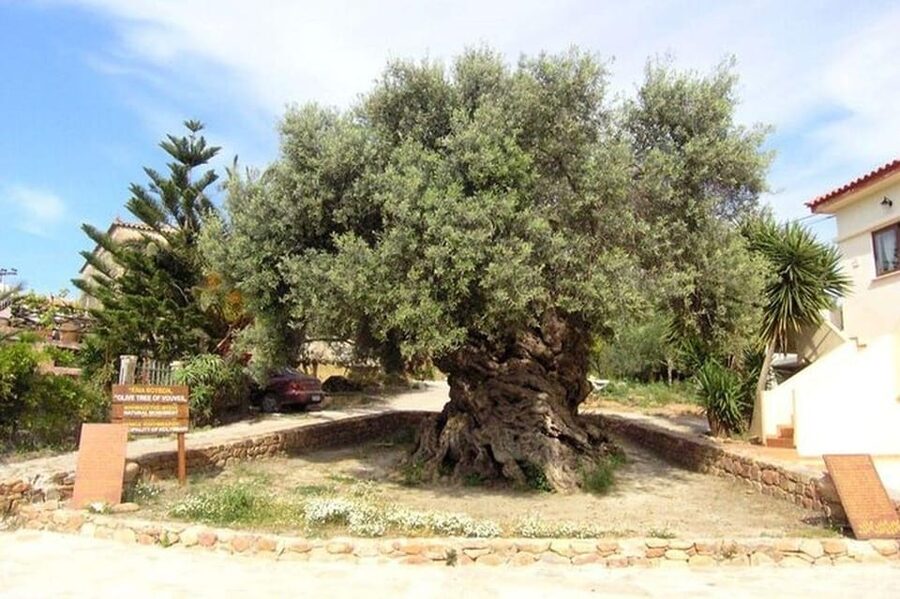
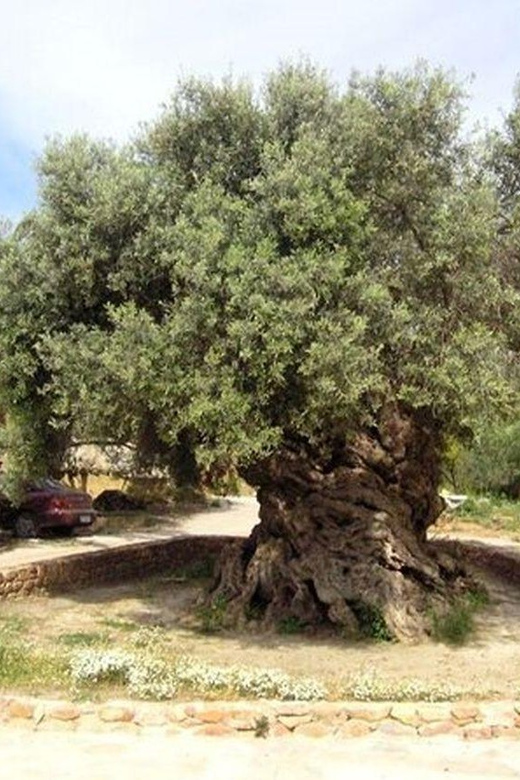
The first major stop is Ano Vouves, home to the famous Olive Tree of Vouves. It is estimated to be between 3,000 and 5,000 years old and is often described as the oldest known olive tree in the world.
The tree is memorable for its shape rather than its height. Its trunk is broad, hollow, and heavily twisted, with the look of weathered stone or sculpture. It gives you a physical sense of how long olive growing has shaped Crete. You are not simply looking at an old plant. You are seeing a living link to thousands of years of local agriculture.
The visit includes a guided explanation and sightseeing time of about 30 minutes. That is enough to see the tree and hear its story, but it is not a long garden visit. If you want unhurried photographs or time to examine the surrounding area, you may wish for more time here.
That short stop works because the tree is a focused sight. You see it, learn why it matters, and then continue to the food producers. Still, photographers and history-minded visitors should keep expectations realistic: this is not a half-day archaeological visit.
Bakery flavors: rusks, bread, and savory pastries
The bakery portion introduces you to a basic truth of Cretan food: excellent meals often begin with very simple ingredients. You can taste traditional rusks, fresh bread, and savory pastries, with the option to buy products for later.
Rusks are twice-baked breads with a firm texture. They are a familiar part of the Cretan table and work well with olive oil, tomato, cheese, or honey. The pastries add something softer and more immediate, and one tasting included a spinach and cheese kalitsouna-style pie.
This is a useful stop for anyone who wants to take local food home. Bakery products are easier to carry than bottles, and you can choose what appeals to you after tasting rather than guessing from a shelf. Personal purchases are not included in the tour price, so bring room in your bag if you plan to buy anything.
The exact order of the bakery, cheese, honey, and olive mill visits can vary. The important point is that the day offers both tasting and explanation. You are not rushed through a single sample and sent back to the bus.
More Wine and Cheese Tastings in Greece:
- Cheese & Wine Trails – Naxos
★ 5.0 · 29 reviews - Cheese and Wine Tasting (Guided Tour INCLUDED)
★ 4.5 · 14 reviews - Naxos Mythology & Ancient Sites Tour with Cheese & Wine
★ 4.5 · 12 reviews - Cheese and Wine Tasting Tour From Chania
★ 5.0 · 7 reviews
Cheese making and Cretan dairy
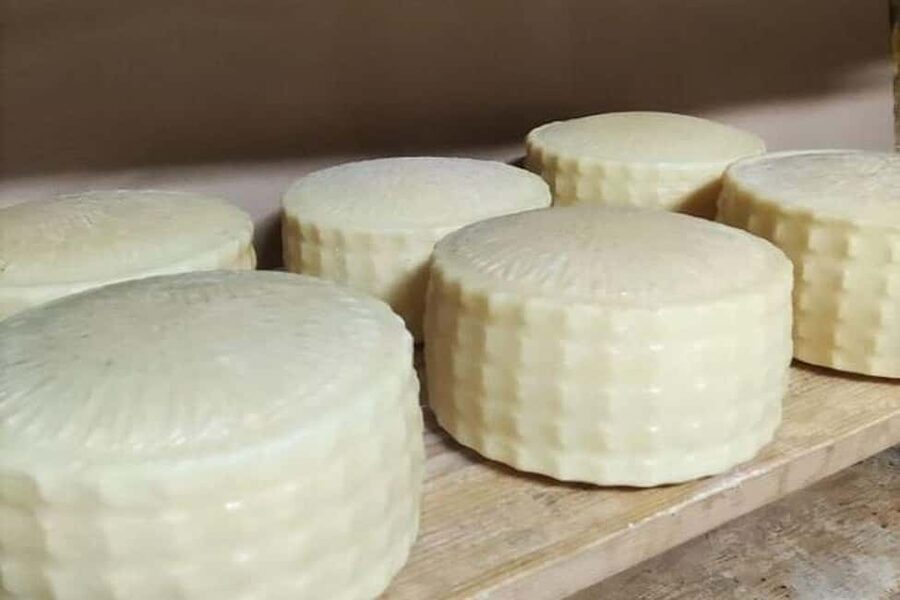
The cheese factory is a multi-award-winning producer, and the visit includes a tasting and an explanation of how cheese is made. If production is taking place during your visit, you may see part of the process. If not, the guide or staff explains the stages.
This seasonal difference is worth noting. A working production line is interesting, but the visit does not depend on seeing one. The tasting remains the main event, and you can compare several local cheeses with bread or other Cretan foods.
Cheese is one of the best ways to understand the island’s food traditions because it is closely tied to farming and the use of local milk. The stop gives you a clearer idea of why Cretan meals often feel satisfying even when the ingredients look modest.
You may also have a chance to purchase cheese. If you are traveling with only hand luggage, consider how you will carry food products. The tour allows optional purchases, but packing and airline rules remain your responsibility.
Honey, olive groves, and the working olive mill
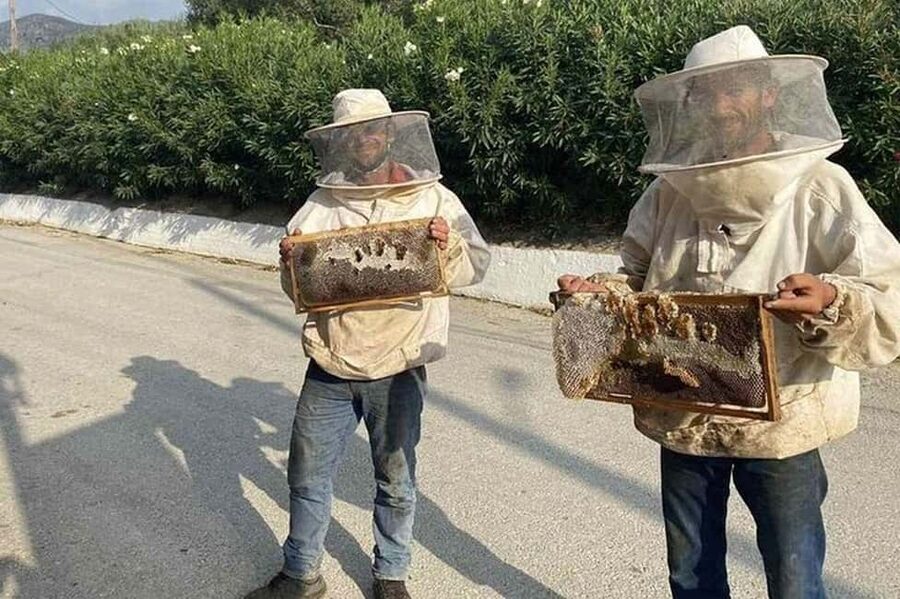
For many people, the honey and olive oil portion is the most informative part of the day. You walk among old olive trees and learn how honey moves from bees and hives to extraction and bottling. The presentation also explains why bees matter to food production and the wider countryside.
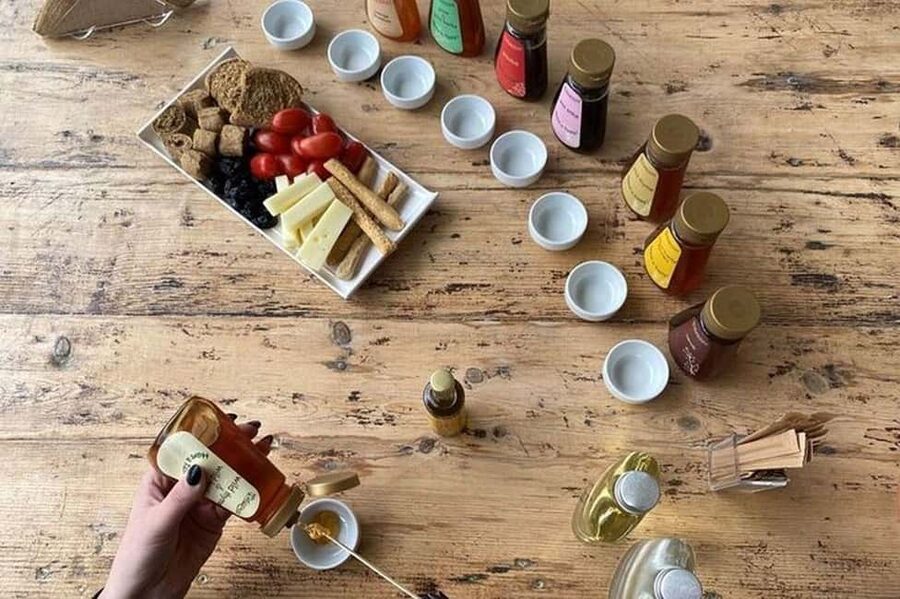
The honey tasting gives you a chance to compare different varieties rather than treating honey as one single flavor. A useful tip is to take mental notes, or write down your favorites if permitted. With several samples and plenty of information arriving quickly, it is easy to forget which honey you preferred.
The olive oil section follows the product from harvest to pressing and finishing. You learn how olives are processed at a local mill and why fresh oil is central to Cretan cooking. This makes the tasting more useful because you are not just sipping oil from a small cup. You have an idea of the work behind it.
The old olive trees around the stop also connect nicely with Vouves. At the ancient tree, you see the age of the tradition. At the mill, you see the modern process that keeps that tradition in use.
This is a hands-on educational stop, but it is also a sales opportunity. You can buy honey, olive oil, or other products after tasting. That is convenient if you want a useful souvenir, but remember that purchases cost extra. If you are flying with hand luggage, smaller containers may not always be available, so ask about bottle sizes before buying.
Pnevmatikakis Winery and the final tasting
The winery visit takes place at Pnevmatikakis Winery in Nopigia. You receive an introduction to Cretan winemaking and then taste a broad selection of local wines with Cretan delicacies.
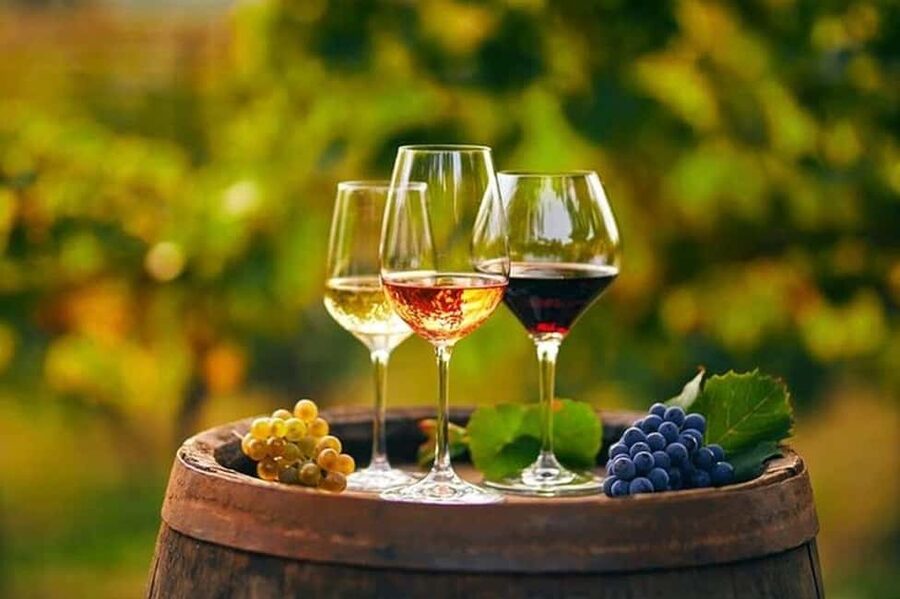
The stated selection includes 20 different wine varieties, while some tastings offer around 18. Either way, that is a lot of wine for a tour costing $49. The format is described as self-service or help-yourself tasting, so you can sample several styles at your own pace rather than being limited to one or two pours.
This is generous, but it calls for restraint. With many wines available, small pours are the sensible choice, especially since you have to board a coach afterward. The wine comes late in the day, which is convenient because you are not drinking heavily before the other food stops.
Wine preferences are personal. You may enjoy the range, or you may find some bottles less familiar than the wines you usually drink. The point is comparison. You can taste how local grapes and Cretan winemaking produce styles that may differ from the international labels found in many hotel bars.
The winery also provides a children’s platter and drinks, so families are welcome. Children do not need to sit out while adults taste, though parents should confirm the current arrangements when booking.
The main weakness here is group size. With a large party, the room can become noisy and it may be harder to hear the explanation. Move close to the host, and treat the tasting as the relaxed end of the day rather than a formal wine seminar.
Food, pacing, and what the day feels like
This is a busy itinerary, but the stops are varied enough to keep the day moving. You shift from an ancient tree to a bakery, from cheese to honey and olive oil, and then to wine. That variety prevents the tour from becoming a long lecture about one product.
The pacing is generally steady, with time to taste and ask questions. The journeys between stops give you a break, and the guide often uses the coach time to explain Cretan culture. You should still expect a full day, not a quick morning outing.
Wear comfortable shoes because you will walk around the olive grove and production areas. Bring sunglasses, a sun hat, and sunscreen. Rural stops may offer limited shade, and the Cretan sun can be strong even when the coach is cool.
The tour is conducted in English. It is best for adults and older children who enjoy food, local production, and cultural explanation. It may be less suitable if you want a quiet private outing, a short schedule, or a narrowly focused wine tour.
There is conflicting information about mobility access. The activity details describe the vehicle as wheelchair accessible, but the same information says it is not suitable for wheelchair users. Contact the provider before booking if this affects you, and ask about the coach, steps, walking surfaces, and each stop.
Who should book this Cretan food day?
I would choose this tour if you want to see rural western Crete without driving. It is also a good fit if you like tasting several local products and want a guide to explain what you are eating.
The tour suits first-time visitors particularly well because it combines scenery, food, history, and agriculture in one day. You get a useful introduction to olive oil, honey, cheese, bread, and wine without having to arrange five separate visits.
It is less ideal for you if you dislike group transport or want long, leisurely time at every stop. The pickup route can be tiring, and the popular stops may feel crowded. A private food tour would offer more control, but it would cost much more than $49.
Should you book it?
Book this tour if value, variety, and rural Crete matter more to you than privacy. The ancient olive tree is a memorable anchor, while the bakery, cheese factory, honey presentation, olive mill, and Pnevmatikakis Winery give the day real substance.
I would book it early in your Chania stay if possible. That gives you time to return to products you liked, buy olive oil or honey later, and use what you learn when ordering food in local tavernas.
Skip it only if the long coach day or shared group format would spoil the experience for you. For most food lovers, the generous tastings, warm guides, safe drivers, and broad view of Cretan life make this one of the better-value day trips from Chania.
FAQ
How long does the tour last?
The tour lasts about seven hours, including transportation, visits, presentations, and tastings.
What is the price?
The listed price is $49 per person.
Is hotel pickup included?
Yes. Pickup and drop-off are included from many hotels, resorts, cafes, supermarkets, and meeting points around Chania and nearby coastal areas.
Which language is the tour conducted in?
The live tour guide speaks English.
What food and drinks are included?
Included tastings may include bakery products, cheese, olive oil, honey, olives, tomatoes, Cretan delicacies, and local wines.
How many wines can I taste?
The tour includes access to around 20 wine varieties. Some descriptions and visitor experiences refer to around 18 wines being available.
Is the ancient Olive Tree of Vouves included?
Yes. The tour includes a guided visit to the ancient Olive Tree of Vouves, estimated to be between 3,000 and 5,000 years old.
Can children join the winery visit?
Yes. Children are welcomed and receive a specially prepared platter and beverages at the winery.
Are personal purchases included?
No. Optional purchases of bakery products, cheese, honey, olive oil, wine, or other items cost extra.
What should I bring?
Bring sunglasses, a sun hat, and sunscreen. Comfortable shoes are also sensible for walking around the olive grove and production areas.
Just added around Greece
- Naxos Mythology & Ancient Sites Tour with Cheese & Wine★ 4.5 · 12 reviews
- Naxos Farm Experience and cheese making★ 5.0 · 5 reviews
- Cheese and Wine Tasting (Guided Tour INCLUDED)★ 4.5 · 14 reviews
- Ios: Cooking Experience with Cheese and Wine Tasting★ 5.0 · 6 reviews
- Culture & Taste Tour★ 5.0 · 6 reviews
- Cretan Farm Tour with Cheese-Making, Olive Oil Tasting & Picnic★ 5.0 · 10 reviews
- Cheese and Wine Tasting Tour From Chania★ 5.0 · 7 reviews
- Explore Shepherd’s Hut and Cheese Making Process★ 5.0 · 2 reviews
Olive Oil and Cheese Tastings, compared.
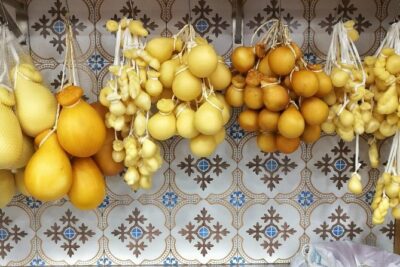
DISCOVER SORRENTO, food &Walking tour . Lemons-cheese&olive oil
Read our review →
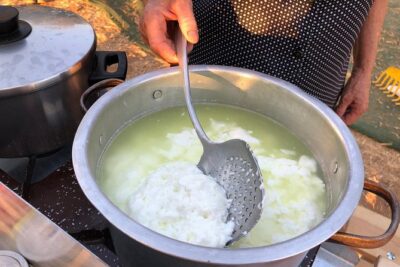
Cretan Farm Tour with Cheese-Making, Olive Oil Tasting & Picnic
Read our review →
Farm Tour with Cheese-Making, Olive Oil Tasting & Picnic
Read our review →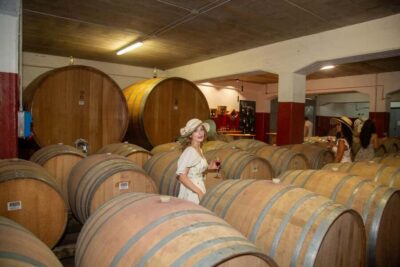
The secret of wine, cheese and olive oil at a farm
Read our review →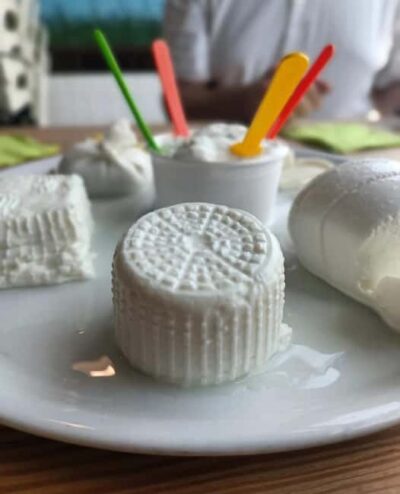
Lecce: Olive Oil, Cheese, and Wine Tasting Experience
Read our review →Browse the lists this tour appears in