
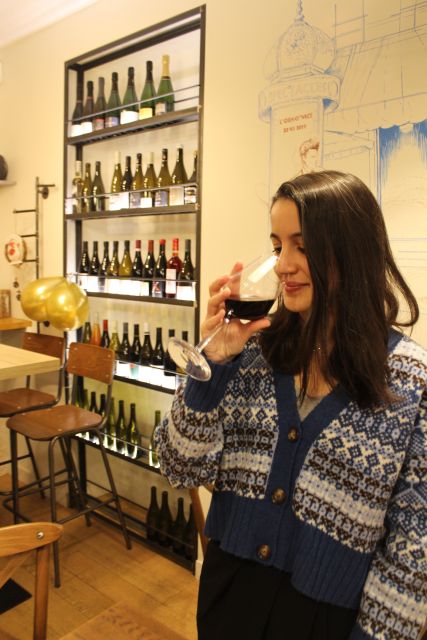
REVIEW · WINE AND CHEESE TASTINGS
Paris: French Wine and Cheese Guided Tasting
Wine makes more sense with cheese. At L’Oeno’Vice, Simon turns a two-hour tasting into a friendly lesson on French wine, regional traditions, food pairing, and the small details that change what you taste. You sample two whites, two reds, and a family Champagne, each matched with a different cheese.
I especially like the small group, limited to eight, and the practical teaching. You do not simply sip and nod. You look at the color, smell the wine, taste it, compare aromas with perfume samples, and learn how food changes the flavor. The main consideration is price: at $70 per person, this is not a cheap bar stop, though the five wine pours, five cheeses, instruction, and intimate setting make it solid value for anyone who wants more than a casual glass.
Key points to know before booking
- Simon teaches from personal experience: He is the owner of L’Oeno’Vice and comes from a family vineyard, including a family Champagne served during the tasting.
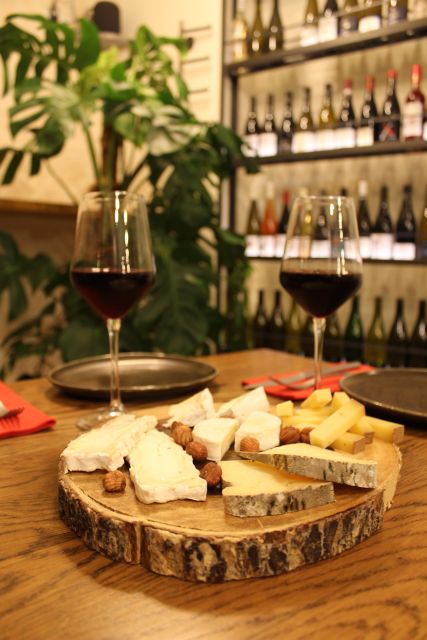
- Five wines are paired with five cheeses: The tasting includes two white wines, two red wines, and one Champagne, with a different cheese for each.
- The perfume exercise is genuinely useful: Comparing wine aromas with perfume samples gives beginners a clear way to train their noses.
- Small groups improve the lesson: With no more than eight people, you have room to ask questions and discuss what you taste.
- The class is friendly rather than formal: Simon uses humor, questions, maps, and visual material to make wine approachable.
- It suits beginners and experienced drinkers: You can arrive with no wine background, or use the session to sort out ideas that still feel confusing.
Inside L’Oeno’Vice with Simon

You meet Simon at L’Oeno’Vice, a wine bar with a relaxed, intimate feel. The setting matters. This is not a large room where an instructor gives the same speech to a crowd. The group is capped at eight, so Simon can ask about your experience and adjust his explanations.
That makes the tasting work for mixed groups. A first-time wine drinker can ask basic questions without feeling out of place, while a more experienced drinker can ask about grapes, regions, or food pairing. The tone is social and light, with enough structure to keep the two hours moving.
Simon’s style is one of the main reasons this experience earns such strong marks. He explains difficult ideas in plain language, answers questions patiently, and adds humor without turning the lesson into a comedy routine. You are there to learn, but it never feels like school.
The location also gives you a chance to see how a Paris wine bar functions. The activity itself is a guided tasting rather than a full meal, so do not arrive expecting dinner. Bread and water have been provided during the tasting, but food and drinks not listed in the experience are not included.
More Wine and Cheese Tastings in France
- Paris: Montmartre Cheese, Wine & Pastry Guided Walking Tour
★ 4.8 · 2,255 reviews - Private Montmartre Food Tour with Wine, Cheese & Pastries
★ 5.0 · 1,027 reviews - Paris Le Marais Food Tour With 10+ Tastings, Cheese, Wine & More
★ 5.0 · 985 reviews
Starting with French wine regions and climate
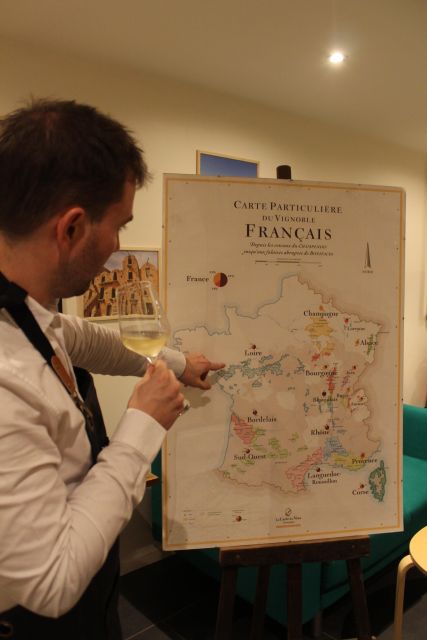
The first part is a short introduction to wine. Simon explains the long history of wine, the main French regions, and why the place where grapes grow matters so much.
You learn how climate, grape variety, and location affect flavor. This is one of the most useful parts for a beginner because French wine labels can seem mysterious. Instead of treating each bottle as a separate puzzle, Simon gives you a framework for understanding why wines from different areas taste different.
The geography lesson also helps you read a restaurant wine list later. You begin to connect a region with the kind of taste you may find in the glass. That does not turn you into a sommelier in two hours, but it gives you enough confidence to make a choice without pointing at the cheapest or most familiar name.
Simon also explains that the same basic grape varieties appear in wine made around the world, while climate and local growing conditions can change the final result. This is a helpful bridge for visitors from countries with their own wine traditions. You are not learning only about France. You are learning how to compare wine regions more intelligently.
Visual material and maps help make the geography easier to follow. If you have ever listened to a wine lesson and forgotten every region five minutes later, the visual aids should help the information stick.
Learning the three steps of tasting
Simon teaches a simple sequence: look, smell, then taste. It sounds obvious, but slowing down changes the experience.
First, you examine the color. The appearance gives you an initial clue and encourages you to pay attention before taking a drink. Next, you smell the wine. This is where the perfume samples become useful.
Simon compares each wine with a different perfume sample and asks you to identify or recognize aromas. The exercise takes some pressure off the usual wine language. You do not need to announce an impressive list of fruit, herbs, flowers, or spices. You can start by noticing what the smell reminds you of.
For many people, smell is the hardest part of tasting wine. The perfume comparison gives your nose a practical workout and makes the lesson more playful. It also shows why wine can seem to change as it sits in the glass. Once you start paying attention to aroma, you notice more than sweetness, bitterness, or alcohol.
Finally, you taste the wine. Simon explains how to make the most of each sip and encourages the group to compare impressions. You are not being graded. Different people can notice different things, and that is part of the fun.
Five wines, five cheeses, one useful lesson
The tasting includes five glasses:
- Two white wines
- Two red wines
- One Champagne
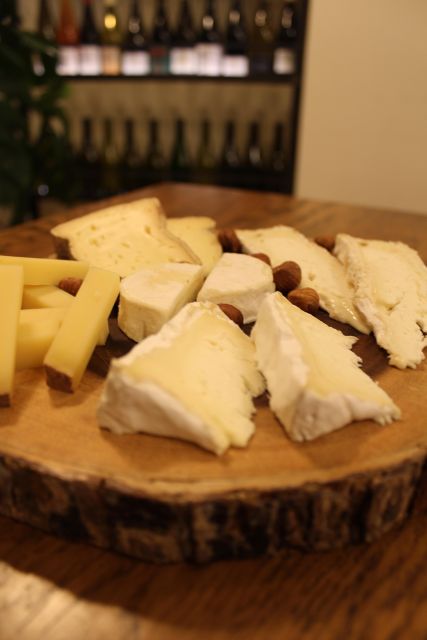
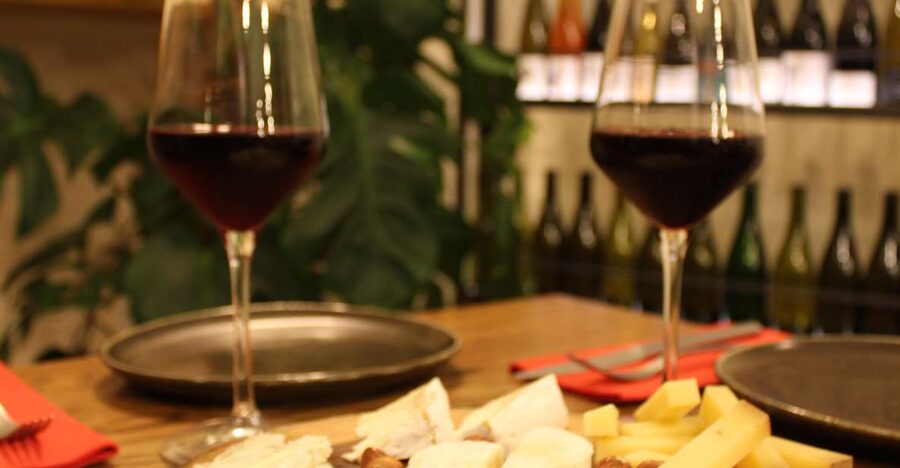
Each wine is matched with a different cheese. The pairings are not just snacks placed beside the glasses. They are the main teaching tool.
You taste the wine, then taste it with the cheese, and notice how the combination changes. A wine you liked on its own may seem different with food. A cheese you found strong may become more balanced with the right wine. This is the point where the lesson moves from theory to something you can feel on your palate.
Simon explains why certain combinations work and helps you think about pairing beyond French wine and cheese. The goal is not to memorize a rigid list. It is to understand the basic logic of matching wine with food, so you can make better choices at home or in a Paris restaurant.
The amounts are also important. The tasting provides enough wine and cheese to taste properly, rather than offering tiny samples that disappear before you can form an opinion. Still, this is not a full meal. Five glasses can leave you pleasantly full when combined with cheese and bread, but you should plan your day accordingly.
A few people may find the price high if they compare it with buying a bottle and cheese at a shop. That comparison misses the teaching, the range of five pairings, and the chance to ask Simon questions. If you only want to drink French wine, a bar will cost less. If you want to understand what you are drinking, the guided format earns its price.
More Wine and Cheese Tastings in Paris
- Paris: Wine and Cheese Lunch
★ 4.9 · 596 reviews - Cheese & Wine Tasting in Montmartre with Local Cheesemonger
★ 5.0 · 470 reviews - French Wine, Champagne And Cheese Tasting Paris SECRET WINE DOOR
★ 5.0 · 464 reviews - Paris Wine Tasting plus Cheese Lunch with an Expert Sommelier
★ 5.0 · 424 reviews
The family Champagne finale
The tasting finishes with Champagne, and the special appeal here is that you may taste Simon’s family’s Champagne. That gives the final glass a personal connection that a standard commercial tasting cannot offer.
The Champagne also provides a useful change of pace after the still wines. You can compare its character with the whites and reds that came before it, while thinking about how sparkling wine works with food and celebrations.
This is one of the details that makes the tasting feel tied to Simon rather than assembled from a generic script. His family connection to wine gives the lesson a personal side, and his passion for the subject comes through without requiring you to share his level of interest.
Why the small group matters
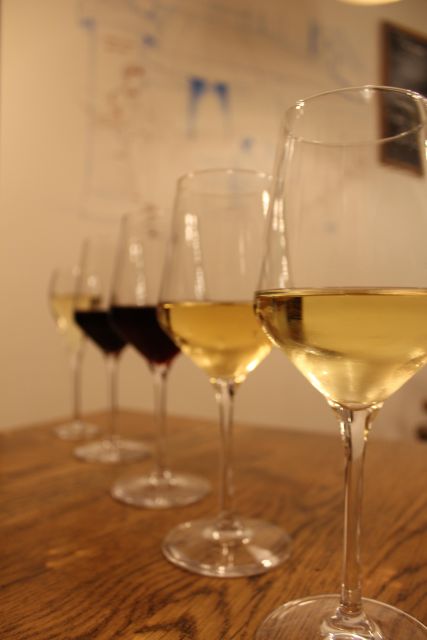
Eight people is the maximum, and the group may be smaller. That changes the mood and the amount of attention you receive.
In a large tasting, you may listen quietly while a presenter works through a prepared speech. Here, Simon can ask what you smell, explain a point again, and connect the discussion to the countries and food traditions represented in the group. That personal touch helps you feel included rather than processed.
The format is especially good for couples, friends, and solo visitors who enjoy meeting people over food and drink. Several groups may attend together, but the tasting encourages conversation among everyone at the table.
It is also a good choice if you feel nervous about wine. Simon starts by finding out what the group already knows, so beginners do not have to pretend. People who do not normally drink wine can still take part, ask questions, and focus on the food pairing.
The only possible drawback is that a small-group class depends partly on the personalities in the room. A lively group can make the discussion more entertaining. A quiet group may mean more of the session comes in the form of Simon’s presentation.
Is this a class, a bar visit, or both?
It is best understood as a wine class held in a bar. The emphasis is on learning, tasting, and pairing, not on lingering over an evening of drinks.
That distinction matters when you plan your schedule. The experience lasts two hours, and it starts at a set time based on availability. You should arrive ready to participate rather than expecting to order freely from the bar throughout the session.
One useful possibility is to ask about staying afterward if you would like more time in the wine bar. The tasting itself does not promise extra drinks or a full meal, so any extension should be treated as separate from the booked activity.
The atmosphere remains relaxed, though. You will not need formal wine knowledge, and you do not need to use technical language. Simon’s approach is warm, funny, and practical, which makes the lesson feel closer to a conversation with a passionate local than a stiff lecture.
Who should book this Paris tasting?
I would recommend it most strongly to:
- First-time wine tasters who want a clear introduction
- Couples looking for a food-focused Paris activity
- People who enjoy cheese but want to understand pairing
- Experienced wine drinkers who still find French labels confusing
- Visitors who want an indoor activity lasting two hours
- Anyone hoping to choose wine with more confidence in French restaurants
It can also work well for the person in your group who claims not to like wine. The tasting offers food, aroma exercises, history, and conversation, not just five glasses in a row. One participant who joined for a partner found that the pairing lesson changed their view of wine.
This is not suitable for pregnant women or children under 18. The activity is wheelchair accessible, and instruction is available in English or French.
Practical value at $70 per person
At $70 per person, you are paying for more than the liquid in the glass. You receive five wine tastings, five cheese pairings, a two-hour lesson, and direct access to Simon in a small group.
The strongest value is the information you can use later. You learn how to taste, how to think about regions, how to compare aromas, and how food changes wine. Those skills remain useful after the last glass is gone.
I also like that the experience can lead naturally into the rest of your Paris trip. Afterward, you should feel more prepared to choose a bottle at a shop, order wine with a meal, or ask better questions at a restaurant. Some people have wanted to buy bottles they tasted, so it is worth making a note of the names of wines you enjoy.
The cost may feel less attractive if you do not drink wine, dislike group activities, or mainly want a substantial meal. In that case, a traditional lunch or dinner may be a better use of your money. But for a focused tasting with real instruction, the price is fair.
The booking terms also offer useful flexibility. You can reserve and pay later, and cancellation is allowed up to 24 hours ahead for a full refund. Check the available starting times when booking, since the session lasts two hours.
My verdict: book it if you want skills, not just samples
I would book this tasting if I wanted a welcoming introduction to French wine with enough food to make the lesson practical. Simon’s family Champagne, perfume exercises, five pairings, and eight-person limit give the activity a personal shape.
You should skip it if you want a full meal, a large selection of bottles, or a casual drop-in bar experience. For everyone else, especially beginners and curious food lovers, this is a smart Paris choice. You leave with more than a pleasant afternoon: you have a better nose, a clearer idea of French regions, and a useful sense of what to order with dinner.
FAQ
How long does the French wine and cheese tasting last?
The experience lasts two hours.
How many wines and cheeses are included?
You taste five wines and five cheeses. The wine selection includes two whites, two reds, and one Champagne, with a different cheese paired with each wine.
Where does the tasting take place?
You meet at L’Oeno’Vice, Simon’s wine bar.
Is the tasting offered in English?
Yes. The live guide can conduct the experience in English or French.
Is the activity suitable for children or pregnant women?
No. The experience is not suitable for children under 18 or pregnant women.
How large is the group?
The activity is limited to eight participants, making it a small-group tasting with time for questions and discussion.
Just added around Paris
- Paris: Wine and Cheese Pairing★ 5.0 · 4 reviews
- Paris Wine and Cheese Tastings Class near Le Marais★ 5.0 · 4 reviews
- French Wine and Cheese Master Class Near the Eiffel Tower★ 5.0 · 6 reviews
- Private wine tour to Sancerre vineyards from Paris with Sommelier★ 5.0 · 11 reviews
- Paris Wine with Cheese Pairing & Tasting Small Group Class★ 5.0 · 6 reviews
- Paris Wine and Cheese Pairing Private Masterclass in a Bistrot★ 5.0 · 7 reviews
- Paris Marché d’Aligre Walking Tour with Chocolate and Cheese Tasting★ 3.5 · 24 reviews
- Wine and cheese tasting at Latin Quarter★ 5.0 · 15 reviews
Wine and Cheese Tastings, compared.
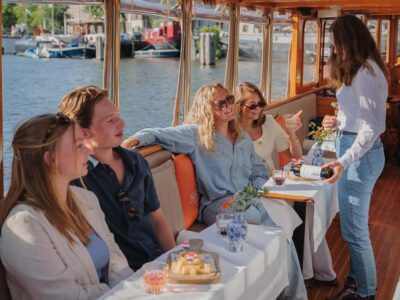
Classic Saloon Boat Cruise with Cheese & Wine
Read our review →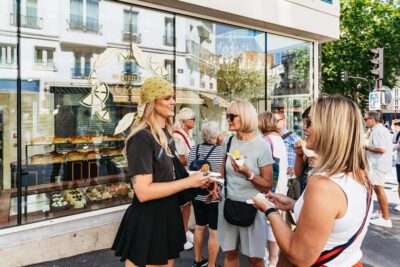
Montmartre Cheese, Wine & Pastry Guided Walking Tour
Read our review →
Evening Candle Light Cruise With Wine & Cheese
Read our review →
Amazing Yarra Valley Wine Tour + Chocolate, Farm Fresh, Gin
Read our review →
Private Montmartre Food Tour with Wine, Cheese & Pastries
Read our review →
Paris Le Marais Food Tour With 10+ Tastings, Cheese, Wine & More
Read our review →Browse the lists this tour appears in