
REVIEW · CHEESE WALKING AND FOOD TOURS
Zadar Walking Tour sponsored by Gligora Cheese and deli.
Zadar reveals itself one layer at a time. This 100-minute walk makes the city easier to understand, with stops at Roman ruins, medieval churches, Renaissance defenses, and the lively market. I especially like the central meeting point on Narodni Trg and the way local guides add useful advice about food and shopping. The main drawback is that the square can be confusing to locate at first, and warm weather can make the walk feel hotter than expected.
At $18.14 per person, the tour is a fair buy if you are new to Zadar or want the story behind places you might otherwise simply photograph. Guides such as Melina, Jasmina, Hajdi, Sara, Lucinja, Inez, and Milena have been praised for making the walk friendly and easy to follow. I also like that the experience can include a stop for Pag cheese, tying Zadar’s history to local food.
The route is not physically demanding, and most people can take part. Still, do not expect long visits inside every church. Several stops last about 10 minutes, while the cathedral and St. Donatus receive only a few minutes each. This is a brisk orientation walk, not a full museum tour.
Key points about this Zadar walking tour
- Roman, medieval, and Venetian Zadar in one compact route: You move from the Roman Forum to medieval churches, Renaissance wells, and a former military bastion.
- A market stop adds local flavor: Zadar’s main market offers fruit, vegetables, fish, meat, regional products, and possible cheese tasting.
- The guides are the real strength: Melina, Jasmina, Sara, Hajdi, Lucinja, Inez, Milena, and others are praised for warmth, clear explanations, humor, and local advice.
- The tour returns to Narodni Trg: You finish where you started, which makes it easy to continue sightseeing or find lunch.
- Good value for first-time visitors: At $18.14, you get a guided route through many of central Zadar’s key sights without paying separate admission fees.
- Plan around the sun: The walk lasts about 1 hour and 40 minutes, and parts of the route offer little shade or breeze.
Why this short walk works so well in Zadar
Zadar is compact, but its story is not. Roman paving, Venetian fortifications, medieval churches, Austro-Hungarian park planning, and modern Croatian life all share the same peninsula. Without context, the city can feel like a collection of attractive ruins and stone lanes. With a guide, the pieces begin to connect.
That is the main value here. You are not simply checking off the Forum, the cathedral, and St. Donatus. You are learning why the city built wells inside its defenses, how a park came to sit on a bastion, and why a church contains one of Croatia’s most important medieval silver caskets.
The route takes about 100 minutes, making it a useful first activity after arriving in Zadar. I would use it to get your bearings, note restaurants and shops, and then return later to the places that deserve more time. The tour is also short enough to fit into a morning or afternoon without taking over your day.
The group limit is 30 people. That is not an especially tiny group, but several experiences have had only a handful of participants, including one evening walk with six people. Smaller groups allow more questions and make it easier to hear in narrow streets. Group size can vary, so you should not book expecting a private tour.
More Cheese Walking and Food Tours in the world:
- Paris: Montmartre Cheese, Wine & Pastry Guided Walking Tour
★ 4.8 · 2,255 reviews - Private Montmartre Food Tour with Wine, Cheese & Pastries
★ 5.0 · 1,027 reviews - Paris Le Marais Food Tour With 10+ Tastings, Cheese, Wine & More
★ 5.0 · 985 reviews
Starting at Narodni Trg, the People’s Square
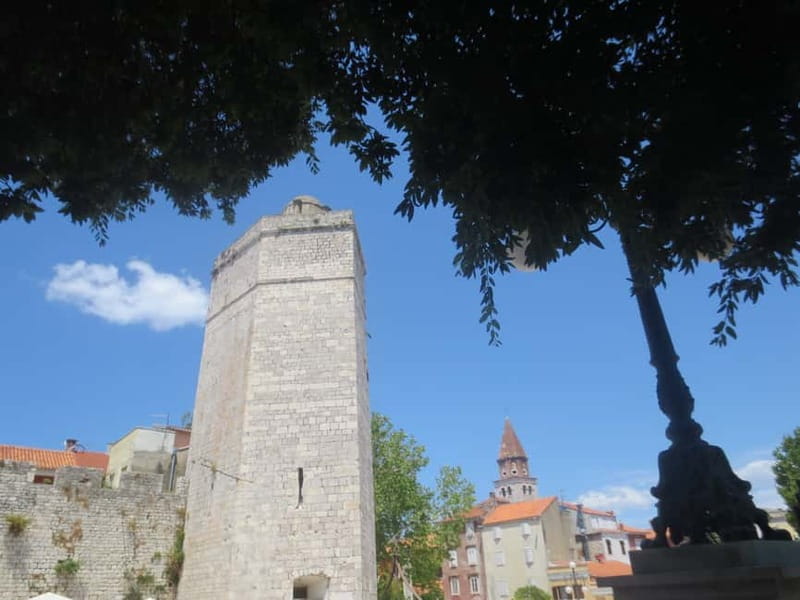
The walk begins at Narodni Trg, or People’s Square, a practical meeting point in the center of the peninsula. It has served as a focus of public life since the Middle Ages, when it was known as Platea Magenta.
The square’s most notable building is the City Guard, or Gradska straža. Designed by Venetian architect Michele Sanmicheli, it was built in 1562. This is a useful first lesson in Zadar’s long connection with Venice and the Adriatic trade world.
Your guide should help orient you here before leading you into the surrounding streets. The meeting point is central, but one piece of practical advice matters: allow extra time to find the exact spot. One participant found the starting location difficult to identify and felt the instructions were not clear enough. Narodni Trg is easy to name, but busy squares can still cause confusion when you are looking for a guide rather than a landmark.
Once the walk begins, the square works well as an introduction because it is not just a pretty gathering place. It shows how Zadar’s public life developed around civic buildings, churches, cafés, and market routes.
St. Lawrence Church and the city beneath the surface
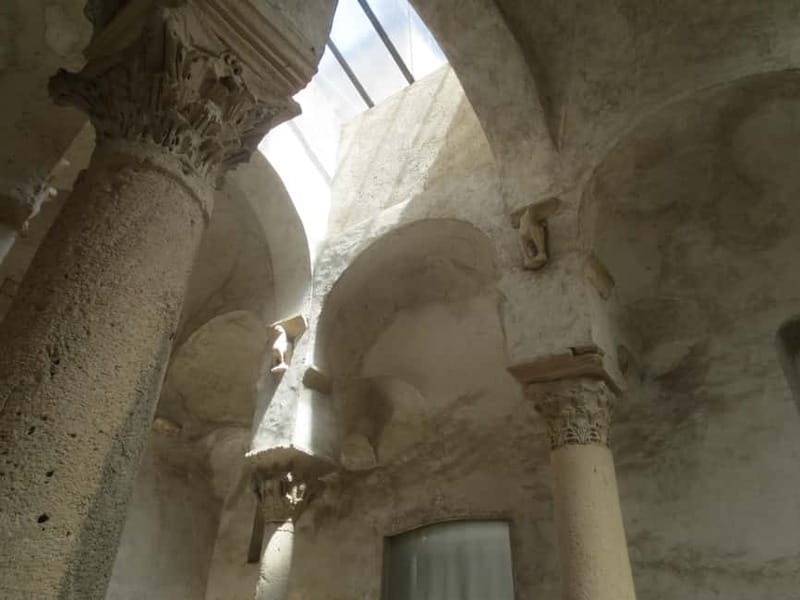
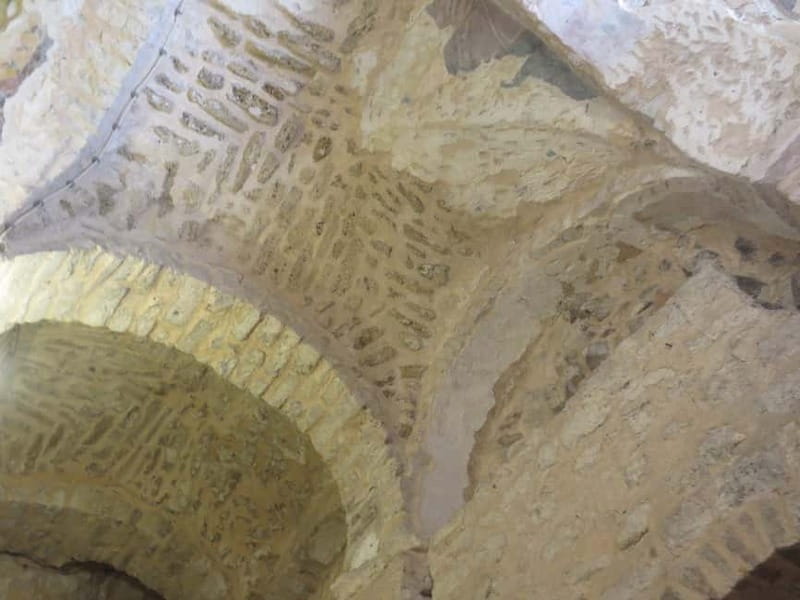
The remains of St. Lawrence Church are reached through Café Lovro on the square. This small detail is part of the charm. You do not approach the church through a grand open courtyard. Instead, one of Zadar’s oldest surviving structures is tucked into the modern life of the square.
The church dates to the 11th century and is pre-Romanesque. It is the oldest part of Narodni Trg, giving you a direct connection to the early medieval city.
This stop lasts about 10 minutes. That is enough for an explanation and a look, but not a long architectural study. If early Croatian church design interests you, make a note to return or ask your guide what details deserve closer attention.
St. Simeon and a remarkable medieval casket
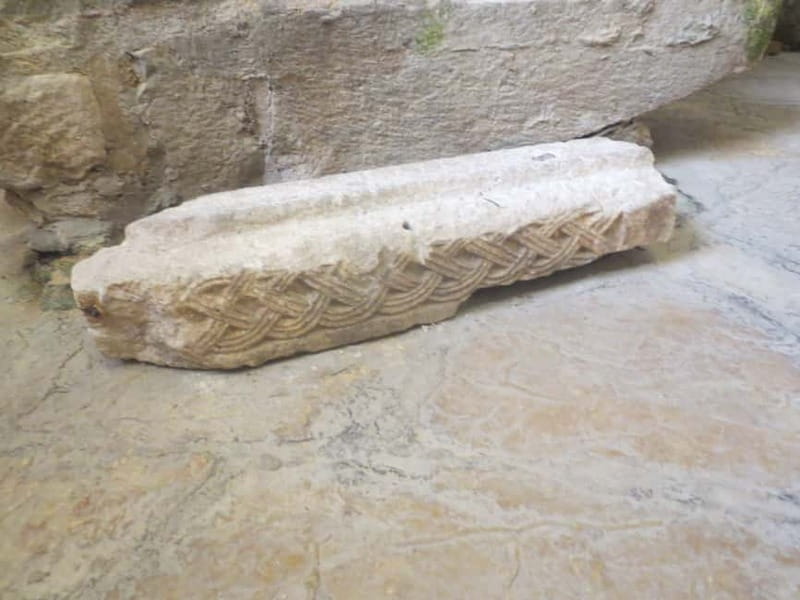
The Church of St. Simeon holds one of Zadar’s most unusual religious treasures. Inside a silver casket is the preserved body of Simeon the God-receiver, the biblical figure who held the infant Jesus in the Temple of Jerusalem.
The casket is considered the most valuable work of medieval goldsmith art in Croatia. Even if you are not especially interested in church relics, the story gives this stop unusual weight. It connects a small Dalmatian city with the Gospel of Luke, medieval devotion, royal patronage, and the skilled metalwork of the period.
The tour allows around 10 minutes here. That is a good amount of time for an introduction, though the casket may deserve more attention than the schedule allows. I would listen for the guide’s explanation of the object itself, not just the religious story. The craftsmanship and the casket’s place in Croatian cultural history are just as important.
A few more cheese tours around the world worth a look
- Amsterdam Classic Saloon Boat Cruise with Drinks and Cheese
★ 5.0 · 31,825 reviews - Amsterdam: Classic Saloon Boat Cruise with Cheese & Wine
★ 4.6 · 27,035 reviews - Krakow–Zakopane: Cable Car, Chocholow Baths, Cheese & Vodka
★ 5.0 · 10,720 reviews - Krakow–Zakopane: Cable Car, Chocholow Baths, Cheese & Vodka
★ 4.8 · 8,989 reviews
Five Wells and Zadar’s defensive water supply
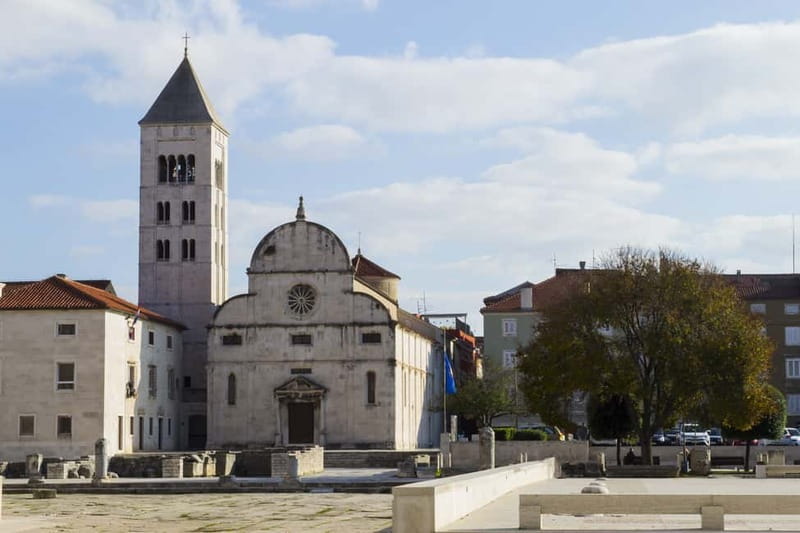
At Five Wells Square, the name tells you what to look for. Five ornamental wellheads line the square beside the medieval walls and the Renaissance bastion Grimani.
The wells were part of a large cistern built by the Venetians in the 16th century. Zadar needed a dependable water supply while facing Turkish sieges, and the cistern helped the city withstand long periods of pressure. A defensive ditch once ran below the old walls.
This is one of the route’s best examples of practical history. Fortifications are often presented as walls and towers, but water could decide whether a city survived. Here, the defenses include a public works project that still shapes the appearance of the square.
The stop takes about 10 minutes. You will have time to understand the basic engineering and see the relationship between the wells, walls, and bastion. The square also leads naturally to the next stop, Queen Jelena Madijevka Park.
A park on a bastion at Queen Jelena Madijevka Park
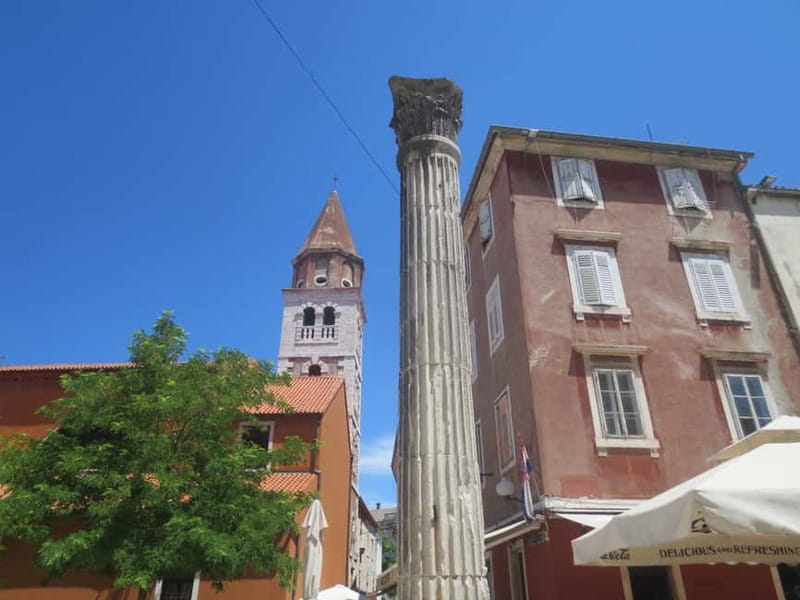
The park was created on top of the Grimaldi bastion in 1829 by Austrian commander Baron Franz Ludwig von Welden. He was a botanist and an admirer of Dalmatian plants, and the park became the first public park in Dalmatia.
Turning a military structure into a garden was an unusual choice. It also changed the way people experienced the fortifications. Instead of seeing the bastion only as a defensive object, you can now view it as a public place for walking and rest.
This stop adds welcome variety. After several churches and historical structures, you get greenery and a different view of Zadar’s civic development. The tour allocates about 10 minutes, so do not expect a long pause in the park. Still, the guide’s explanation helps you see why the park matters beyond its appearance.
If you are walking in summer, this section may feel more comfortable than exposed stone streets, but the route as a whole is not heavily shaded.
Zadar Market, fish, produce, and Pag cheese
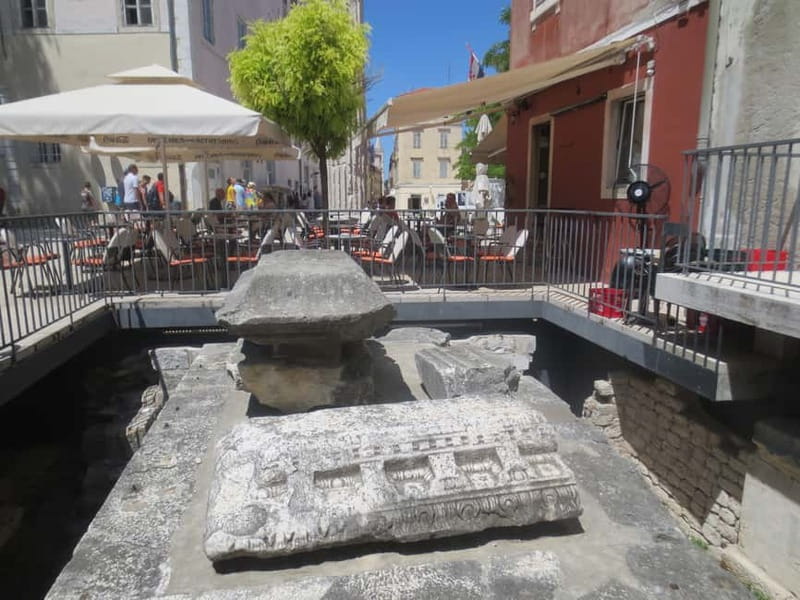
Zadar’s main green market is one of the most useful stops for understanding daily life. The market includes open-air produce stalls and a covered fish market, with fruit, vegetables, fresh fish, meat, local products, and souvenirs.
The market has been in its current location since 1952, although the city’s main market once occupied the ancient Roman Forum. That change says something about Zadar’s ability to layer new routines over old spaces.
This is also where the tour can become especially personal. Several guides have taken participants to a famous cheese shop, with a tasting of Pag cheese. The tour is sponsored by Gligora Cheese and deli, so the food element is not an afterthought. Pag cheese is one of the area’s signature products, and tasting it gives you a useful reference point for shopping later.
The cheese stop may be the most practical part of the tour for food-minded visitors. You can ask where to buy local products, what to look for at the market, and where to eat afterward. The exact tasting experience is not spelled out as a formal promise for every departure, so I would treat it as a likely feature rather than a guaranteed full food tour.
St. Chrysogonus and a vanished Benedictine complex
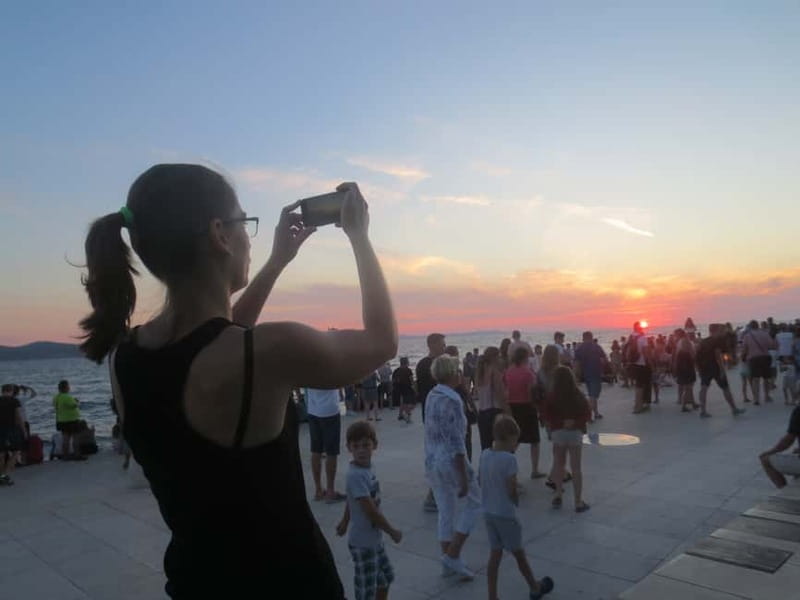
The Church of St. Chrysogonus is a Romanesque church consecrated in 1175. It was built on the site of a Roman emporium and replaced an earlier church dedicated to St. Anthony the Hermit.
Today, it is the remaining part of a much larger medieval Benedictine abbey. That fragmentary survival is typical of Zadar. Buildings have been altered, damaged, repurposed, or lost, leaving individual churches to carry the memory of larger institutions.
The church also has a royal connection. Elizabeth of Bosnia, the murdered queen dowager of Hungary and Dalmatia, was secretly buried here in 1387. Her body stayed in the church for three years before being moved to the basilica in Székesfehérvár.
A bell tower was begun in 1485 but never completed. That unfinished project gives the building another small but memorable detail. The visit lasts about 10 minutes, which should be enough for the guide to explain the church’s place in the medieval city.
St. Anastasia Cathedral and a quick look inside
Zadar Cathedral was built in the 12th and 13th centuries. Its facade is richly decorated, while the interior has three naves and surviving frescoes in the side apses.
The cathedral suffered heavy bombing during World War II and was later rebuilt. That damage and reconstruction are important to remember when looking at the building. What you see today reflects both medieval construction and modern repair.
The cathedral contains the relics of St. Anastasia in a marble sarcophagus in the left apse. The choir has finely carved stalls, and a glass vestibule lets you look inside when the cathedral is closed.
The scheduled stop is only about five minutes. Think of it as an orientation, not a full visit. The cathedral may often be closed, so the glass vestibule is a useful backup. If it is open and you want to study the interior, ask your guide whether you can return later with enough time.
The Roman Forum and St. Donatus
The Forum is where Zadar’s ancient past becomes impossible to miss. Constructed between the first century BC and the third century AD, it once served as the center of Roman civic and religious life.
Today, Roman stones and columns appear among later buildings and streets. That mixture is one of Zadar’s great pleasures. You are not looking at a separate archaeological park removed from modern life. Ancient fragments remain part of the city people use today.
The first St. Donatus stop gives you the setting. The church dominates one side of the Forum and helps explain how the area continued to serve religious and civic purposes after Roman rule.
The tour then spends another seven minutes on the church itself. Built at the beginning of the ninth century, St. Donatus is circular and Byzantine in style. It was named after the bishop who commissioned it and is one of the few surviving buildings from the early Croatian kingdom.
Inside, you can see two complete Roman columns reused from the Forum. Paving slabs from the Forum were also uncovered after the original floor was removed. The building has not served as a church for about 200 years and is now often used for concerts and exhibitions.
These are short visits, but they are among the most important stops on the route. If you enjoy architecture, return later when the church is open. The tour gives you the story and the basic design, while a separate visit lets you take in the unusual circular interior at your own pace.
Guides, pace, and the human side of the walk
The strongest pattern across the experience is guide quality. Melina is praised for answering questions from children as well as adults. Jasmina is described as funny, friendly, and good at pointing out less obvious places. Sara is noted for fitting a large amount of information into a short time, while Lucinja receives praise for local stories and a warm manner.
Other guides named in feedback include Hajdi, Zendka, Angela, Mirena, Inez, Milena, and Sarasvati. The exact guide depends on the departure, but the consistent strengths are clear: approachable explanations, local knowledge, and recommendations for food and further sightseeing.
The pace is generally described as comfortable. One family found the tour successful with a 10-year-old because the guide asked questions and kept the child involved. That suggests the walk can work for families, especially if children are interested in stories, churches, and old stones.
The main comfort issue is weather. One participant found September still hot, with little breeze between the buildings. Wear light clothing, carry water, and choose a morning departure if you are sensitive to heat. Three morning or afternoon departure options give you some flexibility.
Is $18.14 a fair price?
Yes, for most first-time visitors. At $18.14, the price is modest for a guided introduction lasting nearly two hours and covering many central sights. There are no separate admission charges listed for the stops, so you are paying mainly for the guide’s time, storytelling, route planning, and local advice.
The value is highest if you would otherwise walk past the churches and Forum without understanding them. It is also good if you want restaurant and shopping suggestions early in your stay.
The value is lower if you prefer to read independently or already know Zadar well. The route moves quickly, and several churches receive only a short explanation. Think of this as a well-organized city orientation, not a specialist architecture tour.
Confirmation arrives at booking, the ticket is mobile, and service animals are allowed. The activity is near public transportation, most people can participate, and free cancellation is available up to 24 hours before the start time. Changes or cancellations inside that window are not accepted for a refund.
Who should book this walk?
I would recommend it to first-time visitors, history fans, families wanting a manageable introduction, and anyone who likes to pair sightseeing with food advice. It is especially useful at the start of a Zadar stay, before you explore the peninsula on your own.
You should also consider it if you enjoy asking questions. The best parts of this experience come from the guide’s ability to connect a church, a Roman column, a market stall, or a piece of Pag cheese to the wider story of the city.
You may want something else if you need long interior visits, a slow photographic walk, or guaranteed cheese tasting as the central feature. In those cases, use this tour as a starting point and plan separate visits afterward.
FAQ
Where does the Zadar walking tour begin?
It begins at People’s Square, Narodni trg, in central Zadar.
Where does the tour finish?
The walk ends back at the meeting point on Narodni Trg.
How long does the experience last?
The tour lasts approximately 1 hour and 40 minutes.
How much does the tour cost?
The listed price is $18.14 per person.
What language is the tour offered in?
The tour is offered in English.
How many people can join the tour?
The maximum group size is 30 people.
Does the tour include a cheese tasting?
Pag cheese tasting has been part of some tours, particularly during the market and food-related portion. The supplied information does not state that it is guaranteed on every departure.
Can I cancel for a full refund?
Yes. You can cancel at least 24 hours before the start time for a full refund. Cancellations or changes made less than 24 hours before the start time are not accepted for a refund.
Should you book the Zadar Walking Tour?
Book it if you want the essential story of Zadar in a short, friendly walk. The route covers the Forum, St. Donatus, the cathedral, medieval churches, Five Wells, the city market, and a park built on a bastion. That is a lot of ground for $18.14.
My best advice is to schedule it early in your visit, arrive ahead of time at Narodni Trg, and bring water. Listen closely to the food recommendations, ask about Pag cheese, and mark the sights you want to revisit. For a first look at Zadar, this is a practical and worthwhile introduction.
Just added around the world
- Zurich: Lucerne Trip, Igloo Fondue and Titlis Rotair Option★ 4.9 · 5 reviews
- Zurich Open-top Tour and Chocolate and Cheese Countryside★ 3.5 · 11 reviews
- Amsterdam: Zaanse Schans E-Bike Tour with Windmills & Cheese★ 4.5 · 12 reviews
- Zaanse Schans & Volendam Private Tour: Windmills and Cheese★ 5.0 · 5 reviews
- Zermatt: Outdoor fondue “group experience under the stars”★ 4.7 · 3 reviews
- Wine Tasting with Cured Meats & Cheeses in Florence★ 5.0 · 2 reviews
- Wine Masterclass & Cheese Tasting Workshop in Bordeaux★ 5.0 · 2 reviews
- Wine & Cheese Afternoon Wine Tours in NOTL★ 4.9 · 24 reviews
Cheese Walking and Food Tours, compared.

Montmartre Cheese, Wine & Pastry Guided Walking Tour
Read our review →
Private Montmartre Food Tour with Wine, Cheese & Pastries
Read our review →
Paris Le Marais Food Tour With 10+ Tastings, Cheese, Wine & More
Read our review →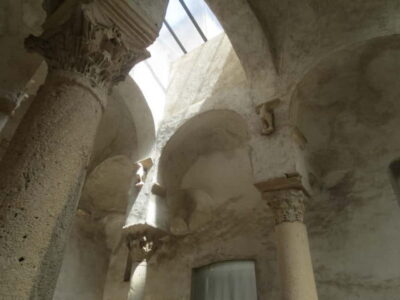
Zadar Walking Tour sponsored by Gligora Cheese and deli
Read our review →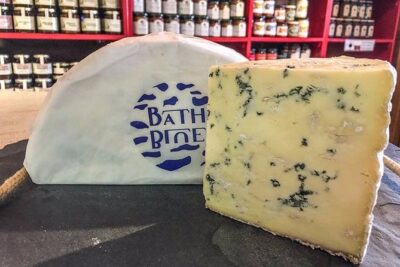

Ultimate London Cheese Crawl : Guided Food Tour
Read our review →
Paris St Germain Food Tour with Cheeses, Foie Gras, Wines & More
Read our review →
Le Marais Walking Food Tour with Cheese, Wine & Pastries
Read our review →Browse the lists this tour appears in