
REVIEW · PARMESAN AND BALSAMIC TOURS
Formigine: Parmigiano tour with full tasting
Cheese making gets wonderfully hands-on here. At Azienda Agricola Moscattini near Formigine, you visit a family-run farm, see how milk becomes Parmigiano Reggiano, and finish with three ages of cheese, local wine, cold cuts, and tigelle. I like the friendly family setting and the clear attention given to animal care, from feed to health. I also like that the visit connects the finished cheese with the cows and the farm that produces the milk.
The main consideration is the food. This is not a light snack, and it is not suitable for vegans, people with animal allergies, or anyone with gluten intolerance. At $41 per person for 90 minutes, it offers good value if you want a tasting plus a working farm visit, but it may feel less worthwhile if your only goal is to sample cheese quickly.
Key points to know before you go
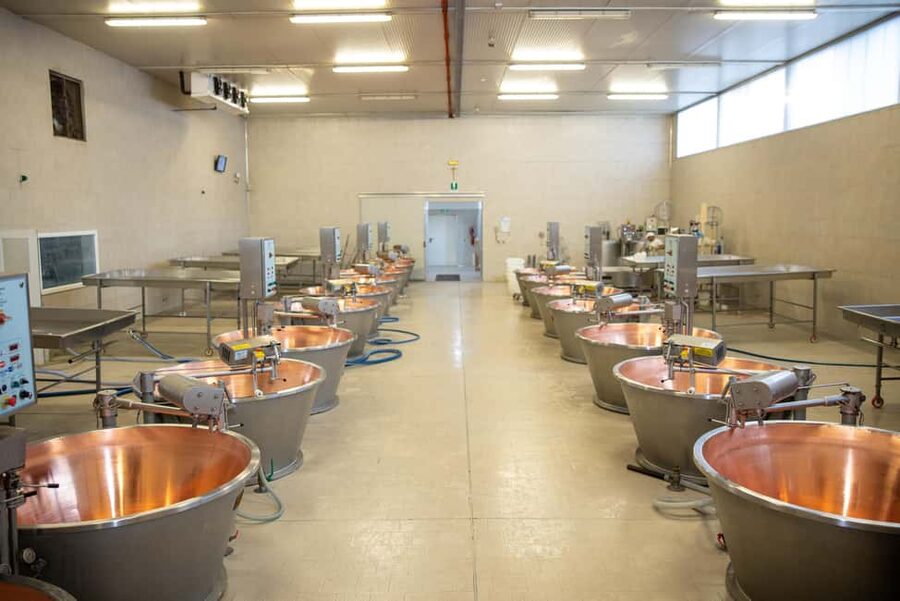
- Watch the cheese-making process: See the large copper vats where milk becomes curd, then follow the wheels through their early resting and brining stages.
- Arrive early for a special moment: Until 9:00 a.m., you may see freshly made wheels lifted from the vats.
- Taste three ages of Parmigiano Reggiano: The final tasting shows how flavor and texture change as the cheese matures.
- Meet the farm at its source: You can visit the barn, see the cows and newborn calves, and learn about their food and care.
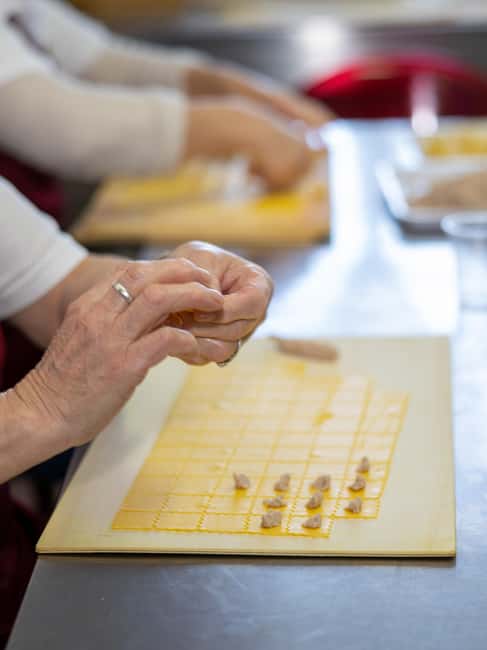
- Look for the sfogline: The women making fresh handmade pasta work in view of the shop, giving you a chance to watch and ask questions.
- Plan for a full plate: Wine or soft drinks, tigelle, cold cuts, and cheese are included, but coffee and shop purchases cost extra.
Starting at the Moscattini farm shop
Your visit begins at the farm shop, which also serves as the meeting point. Go inside, tell the staff you have a reservation, and show the confirmation on your phone. You do not need to print anything.
This is a useful start because the shop gives you a quick introduction to the farm’s wider work. Moscattini produces and sells Parmigiano Reggiano, wine, balsamic vinegar, and fresh handmade pasta. The same place later hosts your tasting, and you can buy products there if you wish.
I like this setup because it feels connected to the farm rather than built only for a short food demonstration. You get a sense of what the family makes and sells before entering the production areas. The trade-off is that shopping can add time and expense, so keep your budget in mind if you are tempted by several local specialties.
The farm shop is also where you can watch the sfogline at work. These pasta makers prepare fresh handmade pasta, and you can ask questions while they work. For visitors interested in the food culture of Emilia-Romagna, this may be just as memorable as the cheese itself. It shows that the region’s cooking traditions are still part of daily production, not just a display for visitors.
More Parmesan and Balsamic Tours in Italy:
- Tour Parmigiano Reggiano dairy and Parma ham
★ 5.0 · 601 reviews - Parma: Parmigiano Production and Parma Ham Tour & Tasting
★ 4.9 · 554 reviews - Guided group tour TastyBus: Parmesan Cheese and Parma Ham
★ 5.0 · 241 reviews
The family story behind Parmigiano Reggiano
A guide introduces the family and explains how Parmigiano Reggiano is made. The family-run setting matters here. Instead of hearing only a broad explanation of a famous Italian product, you learn how this particular farm fits into the process.
The guide also explains traditions connected with Parmigiano Reggiano. That context helps you understand why the cheese is handled with such care at every stage. The tour is not simply about tasting a hard cheese. It is about seeing the time, labor, and routine required before a wheel ever reaches a shop counter.
The information is available in English and Spanish. Some material may be presented in its original language, so you should be prepared for a little variation in how every part is explained. The activity has a live guide, which is helpful when you want to ask about the vats, aging, animal care, or the food served later.
Copper vats and the first stage of cheese making
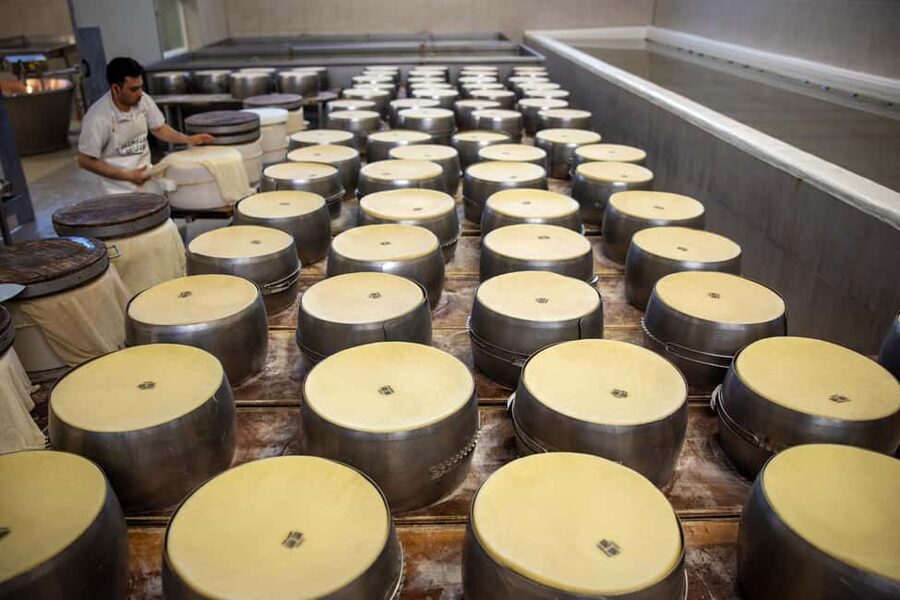
The production area contains large copper vats where milk is transformed into curd. This is the point where the visit becomes especially useful for anyone who has wondered how Parmigiano Reggiano gets its distinctive structure.
You can see the size of the equipment and the care needed to handle the mixture. The guide explains how the milk changes and how the curd is treated. It is a practical lesson, not just a glance through a doorway.
The process also puts the final tasting into perspective. A small piece of cheese can seem simple on a plate, but the wheel began with careful work in these vats. I find that this kind of connection makes the tasting more meaningful, especially when you later compare cheeses of different ages.
If you want to see the freshly made wheels removed from the vats, aim for a visit before 9:00 a.m. This timing is not guaranteed as a separate activity throughout the day, but the early visit can give you a look at one of the most striking points in production. Anyone especially interested in the working process should check the available start times before booking.
Three days of rest, then weeks in brine
After the cheese is made, the wheels rest for their first three days in a dedicated room. From there, they are placed in brine for weeks.
This part of the visit is easy to overlook, but it explains why Parmigiano Reggiano cannot be rushed. The cheese needs time to firm up and develop before the long aging period begins. Seeing these early stages helps you understand that the final product is shaped by a series of measured steps, not by one dramatic act of cooking.
For you, the benefit is simple: the guide gives you a clear sequence to follow. You see the cheese soon after production, learn about the brine stage, and then move toward the warehouse where the wheels spend much more time maturing.
A few more cheese tours around Italy worth a look
- Authentic Farm Tour with Pizza, Cheese, Wine & Limoncello Tasting
★ 5.0 · 698 reviews - Sorrento Farm by Tuk Tuk: Cheese, Limoncello & Hands-On Pizza
★ 5.0 · 628 reviews - Cooking class with Pasta, mozzarella and Tiramisu with wine
★ 5.0 · 549 reviews - Amalfi: Make Fresh Pasta, Mozzarella & Tiramisù with wine
★ 5.0 · 503 reviews
The scalere warehouse and the value of aging
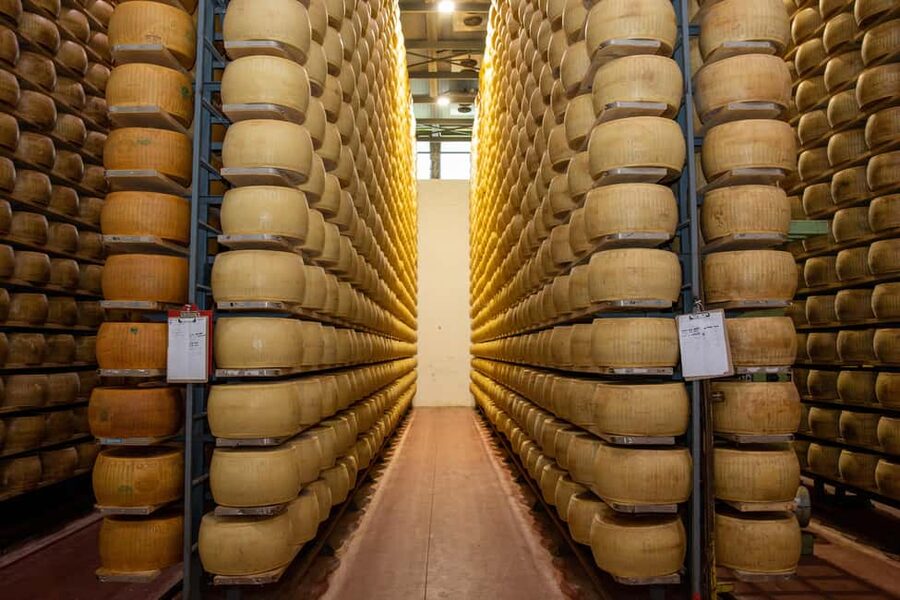
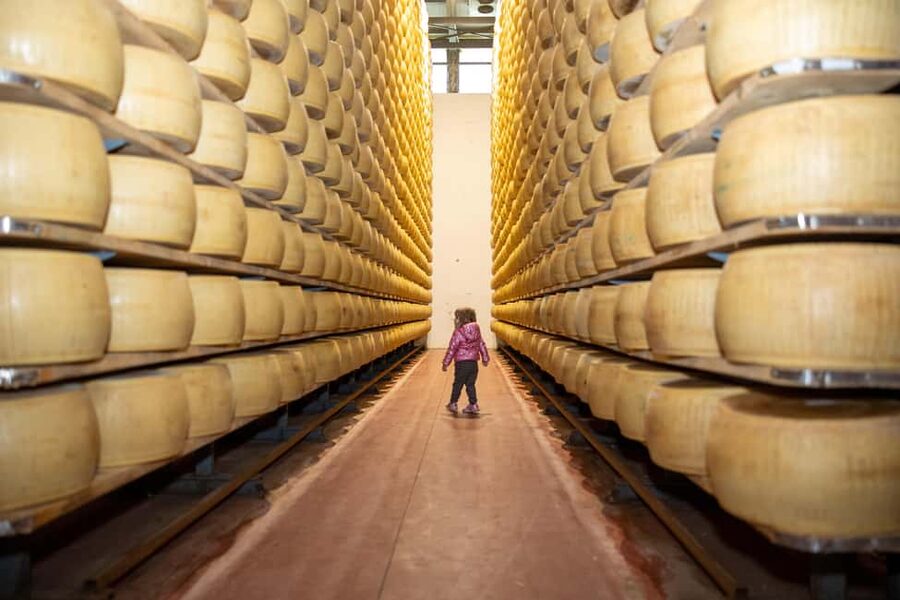
The aging warehouse is lined with wooden shelves called scalere. Here, the wheels mature over time, and the guide explains how aging affects taste.
This is where the tour makes the best case for tasting several ages side by side. A younger Parmigiano Reggiano can have a different texture and a more direct dairy flavor, while an older wheel develops stronger, more complex notes and a firmer bite. The precise character depends on the age of the samples, but the purpose of the tasting is to let you notice those changes for yourself.
The warehouse also gives you a better idea of the scale of the work. Parmigiano Reggiano is not made and sold immediately. The wheels occupy shelves for months or years, and the farm must care for them during that long wait.
I would pay close attention to the explanation here, even if you already know Parmigiano Reggiano. The aging room is the point where production turns into time. It also helps explain why older cheese can cost more.
The barn, cows, calves, and animal care
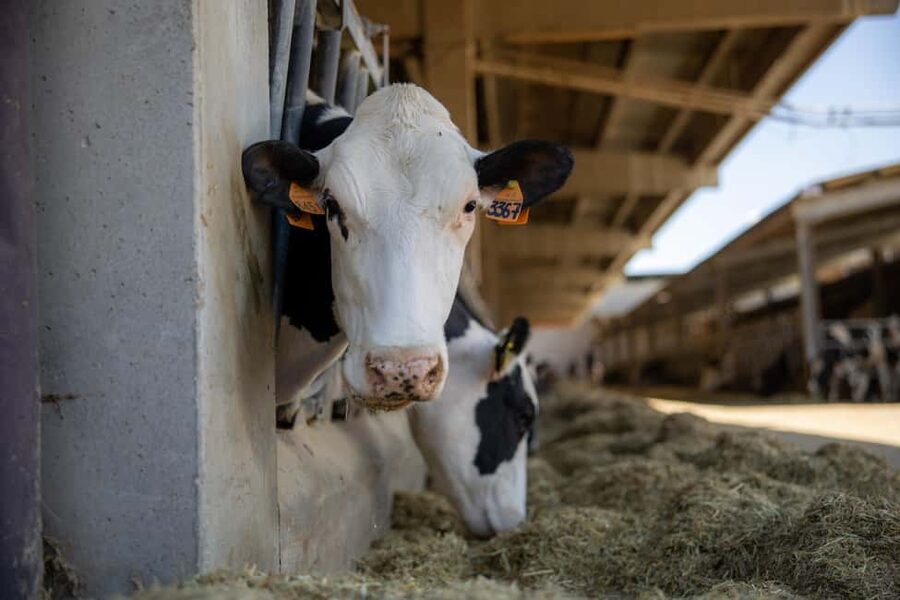
After the cheese factory, you can choose to visit the barn. This takes you back to the beginning of the process, where the cows are milked and cared for.
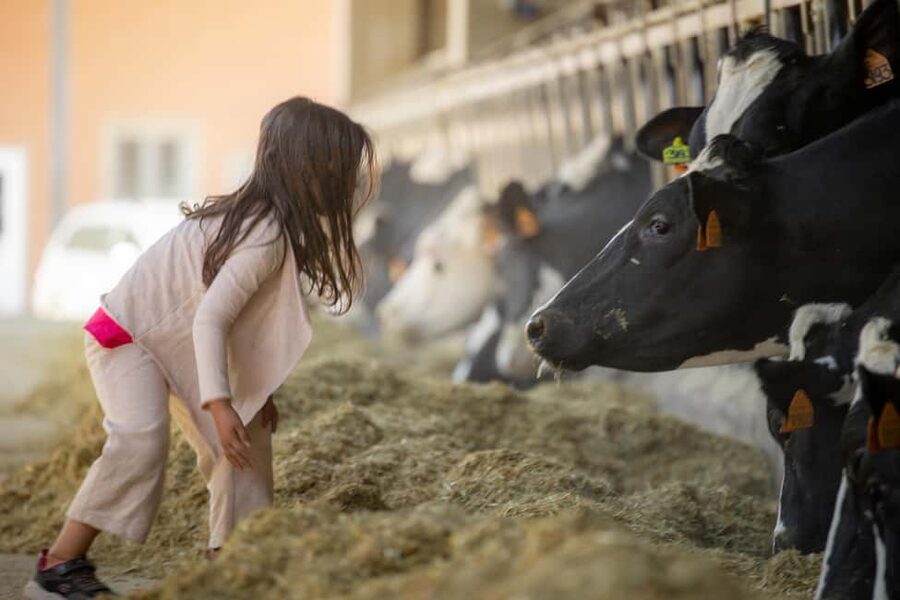
You can learn what the cows eat, see the animals, and possibly see newborn calves. The farm places particular attention on animal welfare, including nutrition and health. That gives this portion more substance than a quick animal viewing stop. You are being shown the part of the operation that supplies the milk, along with the care needed to maintain healthy animals.
This option will appeal to families and anyone who wants to understand the farm as a complete food system. It also adds useful context to the cheese factory. The milk does not appear as an anonymous ingredient. It comes from animals whose diet and health are treated as part of the product’s quality.
Keep the restrictions in mind. The activity is not suitable for people with animal allergies, and riding the animals is not allowed. The farm also prohibits climbing, littering, bare feet, alcohol or drugs outside the provided tasting context, fireworks, explosives, diving, and nudity. These rules are straightforward and fit a working agricultural setting.
The final tasting: three ages and a Modena-style spread
The visit ends back at the farm shop with the main reward: a tasting of Parmigiano Reggiano in three different ages. You can compare the cheeses in a direct way rather than relying on a label or price.
The tasting includes water, wine, tigelle, and cold cuts. Minors and anyone who requests it can have soft drinks instead of wine. Tigelle, also called crescentine, are a typical Modena bread and make the tasting feel like a small local meal rather than a few isolated cheese samples.
Balsamic vinegar may also be part of the local food experience, and the farm produces it as well. The combination of cheese, cured meats, bread, wine, and vinegar gives you a useful introduction to the flavors of the area. It is filling, so do not schedule this as a quick pre-dinner nibble if you are planning a large meal soon afterward.
I especially like the three-age format because it turns tasting into comparison. Try each cheese slowly. Notice firmness, salt, aroma, and how the flavor lingers. The point is not to decide which age is best for everyone. It is to see how maturation changes the character of the same basic product.
If the serving is too much for you, the farm can provide a small box so you can take the remaining food home. That is a practical touch, especially after a full plate of cheese, cold cuts, and bread.
Coffee is not included. Purchases from the shop are also separate, so allow extra money if you want wine, balsamic vinegar, pasta, or cheese to take home.
Is $41 a fair price?
At $41 per person, the price is reasonable for a 90-minute visit that includes a live guide, access to a working Parmigiano Reggiano farm, and a substantial tasting.
You are paying for more than the food on the plate. The visit covers the family story, the copper vats, the early resting room, the brine process, the aging warehouse, and the barn option. You also receive three cheese ages, wine or soft drinks, tigelle, cold cuts, and water.
The value depends on what you want. If you only want to taste Parmigiano Reggiano, you can spend less in a shop. If you want to understand how the cheese is made and connect it with the cows, this price is easier to justify.
The 90-minute length is also practical. It is long enough to cover the important production stages without taking up half your day. You return to the same farm shop where you started, so there is no complicated transfer between stops.
Timing, language, and access
The farm is in Formigine, in Emilia-Romagna, and the starting point is Azienda Agricola Moscattini. The visit returns to the same address.
English and Spanish tours are available. A live guide accompanies you, and the activity is wheelchair accessible. Starting times vary, so check availability when you book. For the freshest production moment, consider a time before 9:00 a.m., when freshly made wheels may be removed from the vats.
You can cancel up to 24 hours ahead for a full refund, and the reserve-now, pay-later option keeps your plans flexible. Those terms are helpful if your schedule in Emilia-Romagna is still changing.
The overall rating is 4.8 from 58 ratings, with especially strong praise for the guide, the warm service, the simple and authentic setting, and the explanation of every step in Parmesan production. One German-language comment singled out the full view of the process and the generous tasting. Those are exactly the two areas where this experience earns its price.
Who should book this farm visit?
I would recommend it to you if you enjoy food experiences that explain the work behind the meal. It is a good match for cheese lovers, families, people interested in Italian agriculture, and anyone building a day around Modena’s food traditions.
It also suits you if you want a small-scale setting rather than a large attraction. The family-run atmosphere, the pasta makers, and the chance to see the barn make the visit feel personal and connected to daily farm life.
I would skip it if you are vegan, allergic to animals, unable to eat gluten, or looking for a short tasting with no production tour. The food is central to the experience, and the visit includes both dairy and gluten-based items.
Should you book the Moscattini Parmigiano tour?
Book it if you want to understand Parmigiano Reggiano from cow to aging shelf, then taste the result in a proper local spread. The early morning option is worth considering if seeing fresh wheels lifted from the vats matters to you.
Skip it only if cheese, farm animals, or bread are not part of your diet or interests. For most food-focused visitors in Emilia-Romagna, the combination of hands-on production details, animal care, handmade pasta, and a generous three-age tasting makes this a well-priced and satisfying stop.
FAQ
How long does the Parmigiano Reggiano tour last?
The visit lasts 90 minutes.
Where does the tour begin?
You meet at Azienda Agricola Moscattini, beginning at the farm shop. Tell the staff you have a reservation and show your booking confirmation on your smartphone.
What languages are available?
The live tour guide is available in English and Spanish. Some content may be shown in its original language.
What food and drinks are included?
The tasting includes three different ages of Parmigiano Reggiano, water, wine or soft drinks, tigelle, and cold cuts.
Is coffee included?
No. Coffee is not included, and purchases from the farm shop are separate.
Can I see the cows and calves?
You can choose to visit the barn, where you can see the cows, learn what they eat, observe the milking area, and see newborn calves.
Is the tour suitable for people with dietary restrictions?
The activity is not suitable for vegans, people with animal allergies, or people with gluten intolerance. Minor guests, and anyone who requests it, can receive soft drinks instead of wine.
Just added around Italy
- Wine Tasting with Cured Meats & Cheeses in Florence★ 5.0 · 2 reviews
- Tuscany: Ripalte Design Winery Wine and Cheese Tasting Tour★ 4.7 · 15 reviews
- Vico Equense: Tour in the dairy “Mozzarella Experience”★ 5.0 · 19 reviews
- From Parma/Cinque Terre: Truffle & Parmesan Picnic (Tasting)★ 5.0 · 2 reviews
- Turin: Gastronomy tasting through oil, wine and cheese★ 5.0 · 2 reviews
- Full Day Prosecco and Cheese Tasting from Venice★ 5.0 · 9 reviews
- Premium Cheeses and Gins Tour in the Prosecco hills. Full lunch!★ 5.0 · 3 reviews
- The Valpolicella food & wine driving tour: cheese factory+ winery★ 5.0 · 6 reviews
Parmesan and Balsamic Tours, compared.
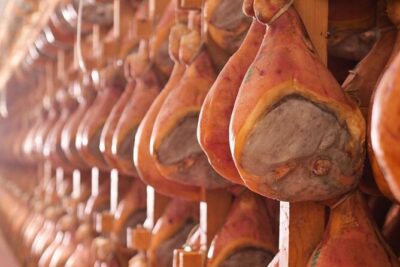
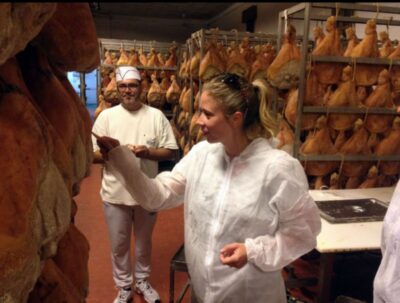
Parmigiano Production and Parma Ham Tour & Tasting
Read our review →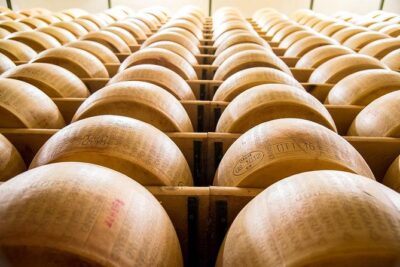
Guided group tour TastyBus: Parmesan Cheese and Parma Ham
Read our review →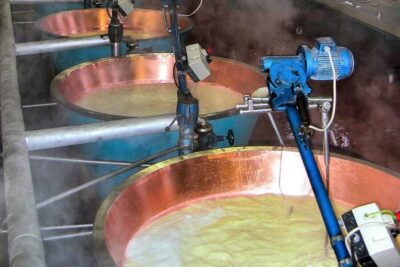
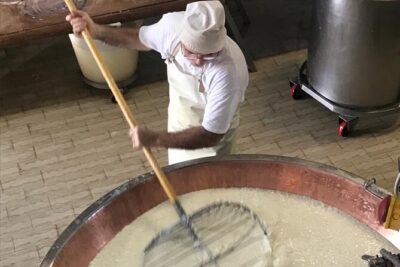
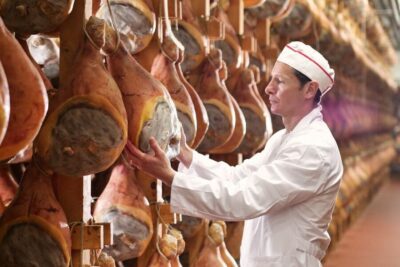
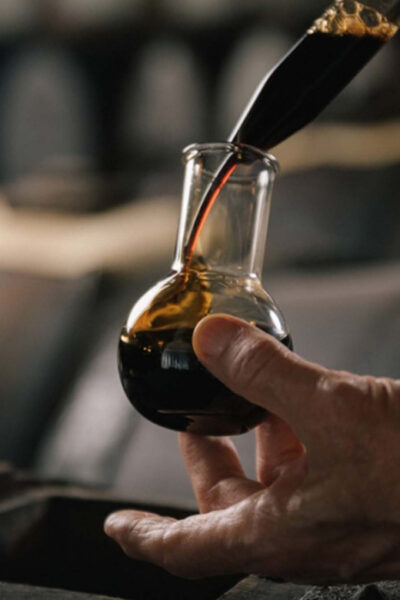
Cheese, Ham, & Balsamic Vinegar Tour with Tastings
Read our review →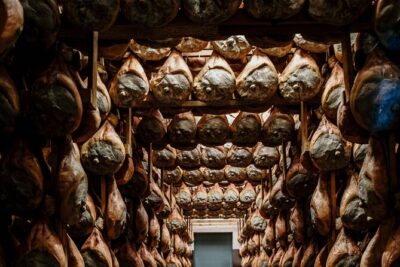
Private Full Day Parma Food Tour: Parmesan Cheese, Parma Ham, Lunch, Vinegar
Read our review →Browse the lists this tour appears in