REVIEW · MOZZARELLA AND BUFFALO CHEESE TOURS
Martina Franca: Mozzarella and Pasta Workshop with Farm Tour
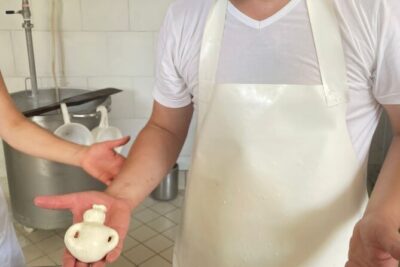
Fresh cheese tastes better at the source. This Martina Franca farm visit combines hands-on mozzarella and pasta making with a look at animals, gardens, a cheese factory, and an old church. I like the small group limit of nine, and I like the chance to meet local artisans rather than simply watch a cooking demonstration. The main drawback is that the experience is not suitable for wheelchair users or people with mobility impairments, and you must arrange your own way to the farm.
The 2.5-hour schedule packs in plenty, from the breeding farm to the bakery and food workshop. Guide Valentina has made a particularly good impression, described as kind and interesting, with an approach that worked well for both a parent and child. Choose the tasting option if you want to eat what you make instead of leaving with only the lesson.
Key points at a glance
- Mozzarella and pasta are made by hand: You take part in the work, guided by instructors who show you traditional methods.
- The farm visit goes beyond the kitchen: You see the breeding farm, vegetable garden, cheese factory, bakery, and an ancient church.
- Small groups keep the workshop personal: The maximum is nine participants, a useful size for questions and practical help.
- Valentina receives warm praise: Her kind, interesting style has worked well for both adults and children.
- The tasting costs extra through the booking choice: Check that you select the option with food tasting if trying the finished products matters to you.
- Plan your arrival carefully: Transport to the farm is not included, and comfortable shoes and clothes are recommended.
A Martina Franca farm visit with real work involved
Many food tours put a plate in front of you and call it a lesson. This one gives you a more active role. You visit a working farmstead near Martina Franca, see where ingredients begin, and then work with the people who turn them into cheese and pasta.
That order matters. You first see the animals and the vegetable garden, then visit the cheese factory and bakery, and finally take part in the workshops. It gives the food some context. A ball of mozzarella is no longer just a pretty item on an Apulian lunch table. You have seen the setting and handled part of the process behind it.
The experience lasts about two and a half hours. That is long enough for several stops without taking up a full day in the Valle d’Itria area. You should still expect a fairly active morning or afternoon. This is not a quick tasting with a short explanation attached.
The group is limited to nine people. I see that as one of the strongest practical features. A small group makes it easier to follow instructions, ask questions, and get help when your pasta shape looks more like an abstract sculpture than dinner.
More Cheese Farm Visits in Italy
- Authentic Farm Tour with Pizza, Cheese, Wine & Limoncello Tasting
★ 5.0 · 698 reviews - Sorrento: Farm Tour with Cheese Tasting & Pizza Making Class
★ 5.0 · 503 reviews - Parma: Traditional Cheese Factory Visit with Tasting
★ 4.9 · 225 reviews
Starting with animals and sustainable farm practices
The first part takes you to the breeding farm. Your guide introduces the animals and explains how the farm works, including its sustainable practices. The information provided does not specify which animals you will see, so it is best to treat this as a farm visit rather than expect a particular species.
For you, the value is in seeing the production side before the cooking begins. Food workshops can feel detached from agriculture. Here, the farm gives the lesson a clear starting point. You learn that the final dish is part of a wider cycle involving animals, crops, skilled workers, and careful use of the land.
This stop should appeal to families. The experience has been described as suitable for young and old, and a child especially enjoyed the visit. The farm setting can also make the tour more memorable for anyone who finds a kitchen lesson easier to appreciate when there is something to see and do outside.
You should wear shoes that can handle a farm visit. Comfortable clothes are also advised. Since mobility is limited as a suitability issue, contact the provider before booking if walking or uneven access may be difficult for you. The organizers say they will do their best to help people with special needs, but the activity is specifically not suitable for wheelchair users or people with mobility impairments.
Walking through the vegetable garden
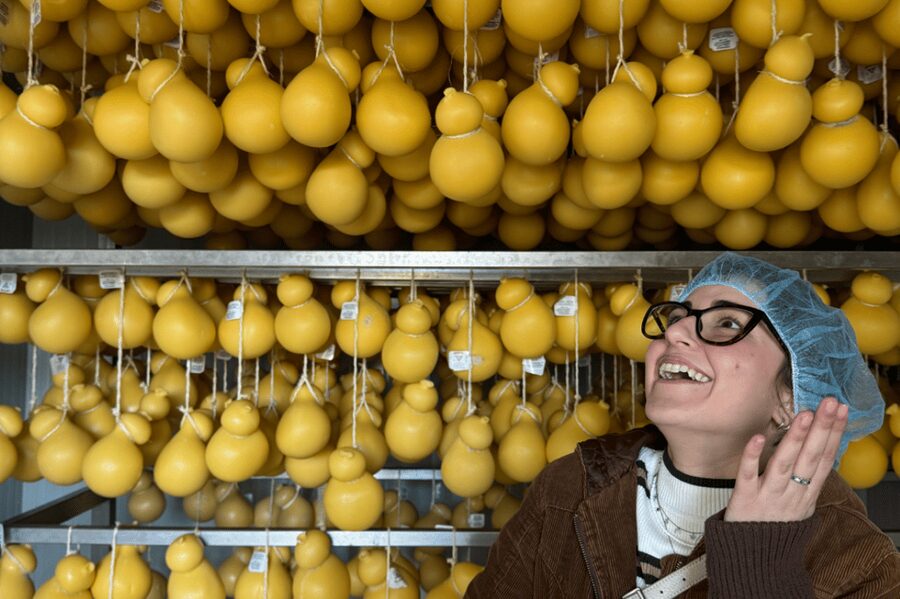
The vegetable garden shows the farm-to-table idea in a simple, useful way. You see the place where some of the produce begins before it reaches the bakery, kitchen, or table. The tour does not present the garden as a separate attraction. It is part of the larger story of how the farm operates.
I like this section because it links the workshop to everyday food rather than treating pasta and cheese as isolated skills. You get a clearer sense of why fresh ingredients matter and how a farmstead can combine several kinds of production in one place.
The garden visit also breaks up the indoor portions of the experience. You move from animals to crops, then later to food production. That variety helps the two-and-a-half-hour schedule feel full without relying only on spoken explanation.
Do not expect a long botanical tour or a lesson on every plant. The supplied information promises a vegetable garden visit, not a specialized horticultural class. Its purpose is to help you understand the farm-to-table path, and it does that as part of the wider itinerary.
Pausing at the ancient church
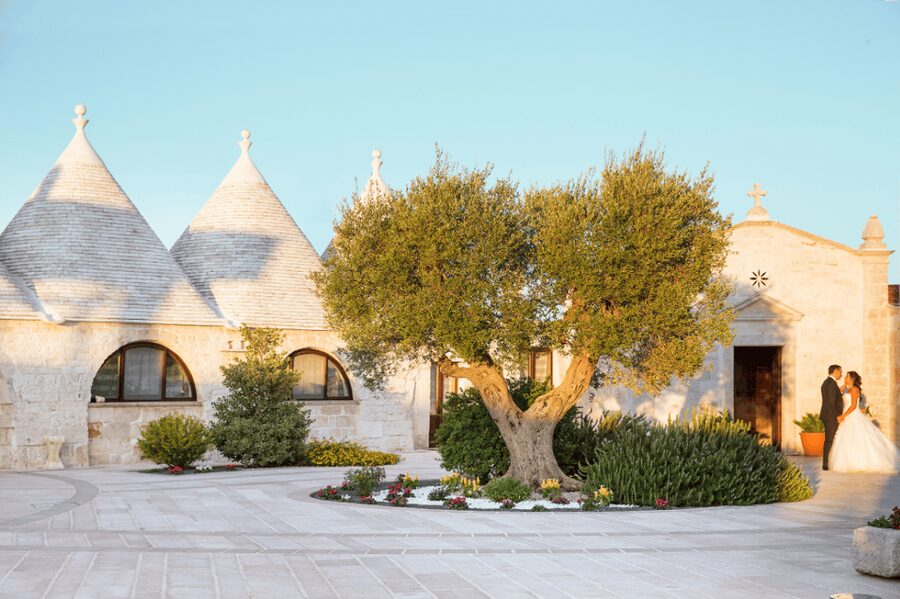
An ancient church is included along the route, with commentary from your guide. This adds a small cultural stop to what could otherwise be a strictly agricultural and culinary visit.
The church matters because farmsteads in Apulia often sit within a wider local story. Here, you are not only learning how food is made. You also get a glimpse of the place’s past through the building and the guide’s narration.
The available details do not specify the church’s name, architectural style, or religious artwork. I would therefore approach this as a short historical visit, not a full church tour. The exact amount of time spent there may depend on the group and the day’s pace.
Still, it is a welcome change of subject. If you are building a Martina Franca itinerary around food and countryside, this stop adds cultural balance without demanding another major excursion.
More Cheese Making Workshops in Italy
- Florence: Mozzarella Making Workshop with Wine Tasting
★ 4.9 · 54 reviews - Florence: Mozzarella Cheese Making with Wine and food Tastings
★ 5.0 · 37 reviews - Sorrento Half-Day Farm Experience: Pizza, Cheese Making and Wine
★ 5.0 · 17 reviews - Dolianova: visit and workshop in a cheese factory
★ 4.8 · 11 reviews
Inside the cheese factory and bakery
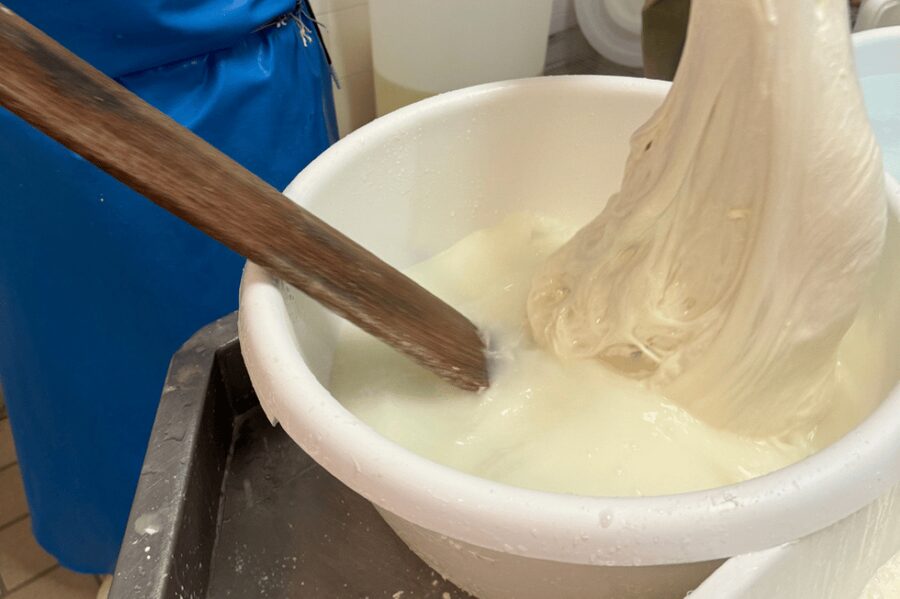
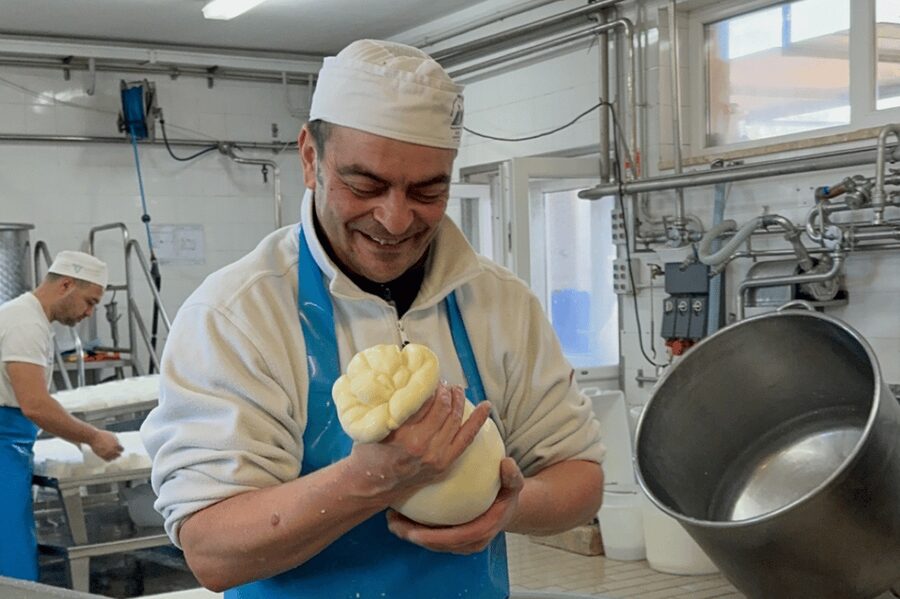
The cheese factory is where the farm’s work becomes more visible. Artisans explain how their products are made and share the methods behind the cheese. You then move into a practical cheese-making workshop rather than simply watching from the side.
That hands-on element is the heart of the visit. You can listen to a demonstration anywhere, but taking part makes the technique easier to remember. The instructors guide you through the process, so you do not need to arrive with cooking experience.
The bakery gives the tour another layer. Cheese and pasta are not the only products in view. You also see how the farmstead’s food production includes baked goods, with artisans explaining their methods.
The descriptions do not promise that you will tour every working area in detail or make several different cheeses. They do promise a cheese factory visit and a cheese-making workshop. Keep your expectations focused on learning and participation rather than a large-scale industrial tour.
Making mozzarella, then shaping pasta
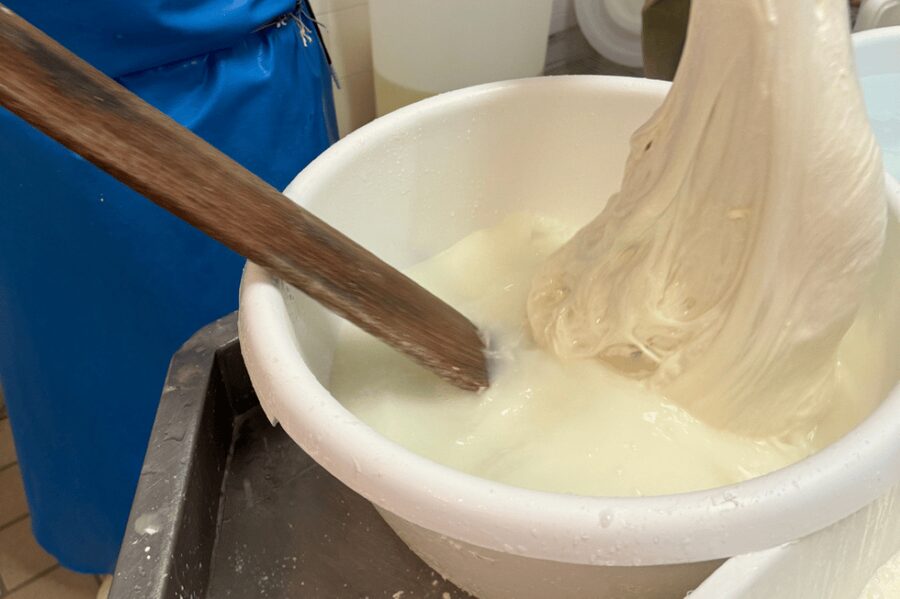
The workshop covers both cheese and pasta, which makes it more useful than a class devoted to one recipe. You learn traditional techniques under the direction of skilled instructors, with the guide helping connect the practical work to the farmstead’s story.
The mozzarella portion should be especially appealing if you want to understand the fresh cheese often associated with southern Italian cooking. You get to see how a basic product is handled and shaped. The provided information does not specify the exact recipe, quantity, or final shape, so the focus is the method rather than a guaranteed take-home portion.
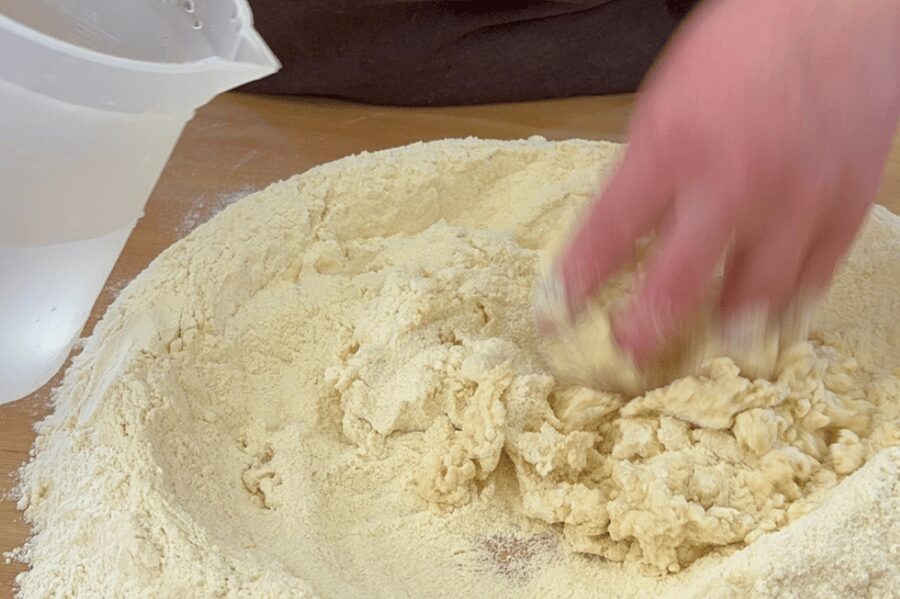
The pasta lesson gives you a second kind of kitchen work. You can expect to learn traditional preparation techniques, though the exact pasta style is not stated. That is worth keeping in mind if you are booking because you want to make one particular shape.
I like the combination because it suits different interests. One person in your party may be excited by cheese, while another prefers pasta. Children can also find the activity more engaging than a long demonstration, especially in a small group where the instructor can offer direct help.
The workshop is conducted in Italian and English. That makes it practical for international visitors, though you should not assume every exchange will be equally detailed in both languages. The expert guide provides narration throughout the itinerary, while the instructors handle the practical food-making sections.
The optional tasting and what the price means
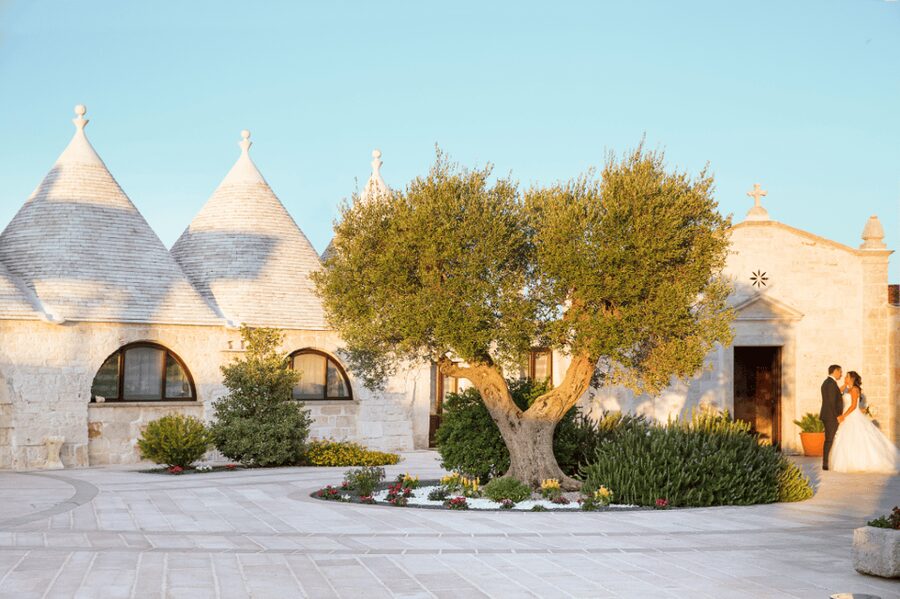
The listed price is $124.61 per person. That is not a bargain-priced cooking class, but the value depends on what you want from a farm visit. You are paying for a small-group experience that combines several parts: the breeding farm, garden, ancient church, cheese factory, bakery, cheese workshop, and pasta workshop.
The food tasting is not included in every booking option. This is the most important price detail. If you want to sample the products made during the workshop, select the option that specifically includes tasting. Otherwise, you may receive the instruction and farm visit without the final food experience.
I would compare this with the price of separate farm tours and cooking classes in the area, but the combined format is the real point here. You get a broader look at the farmstead than you would from a kitchen-only class. You also get more direct participation than you would from a sightseeing tour.
The value is strongest for you if food, agriculture, and local production are central to your trip. It is weaker if you mainly want a large meal, a relaxed tasting, or a quick stop between other sights. The tasting option makes the cost easier to justify because you finish by trying the products connected to the lesson.
How the small-group format affects the visit
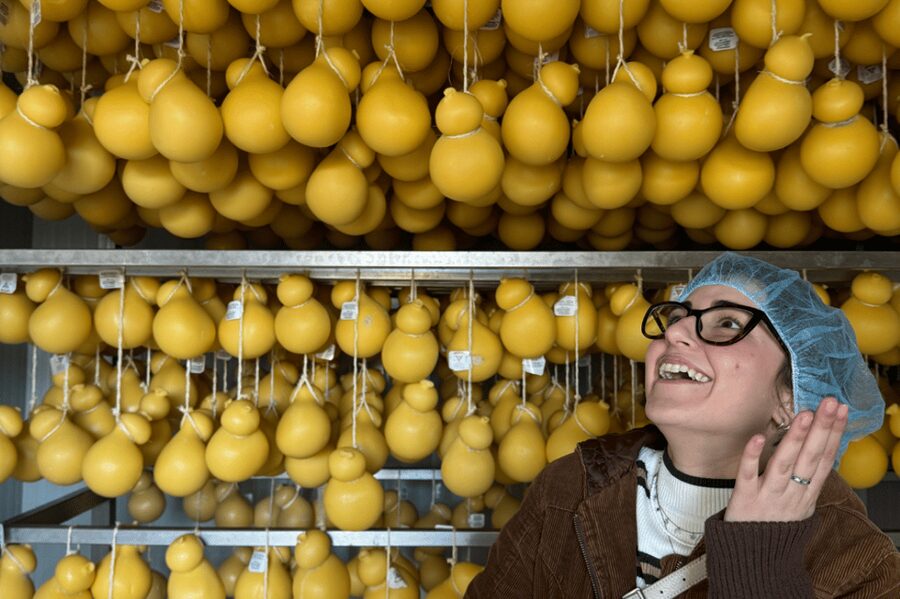
With no more than nine participants, the workshop should feel more personal than a large coach-group activity. You have a better chance of hearing the guide, seeing the demonstrations, and asking questions without fighting for space.
The small group also suits families and mixed-age parties. A child can take part while an adult listens to the cultural or agricultural explanation. Valentina’s friendly manner has been praised, and one account specifically notes that her style worked well for a son as well as an adult companion.
That said, small group does not mean private tour. You share the experience with other participants, and the pace needs to work for everyone. If you prefer complete control over timing or want a highly specialized cooking lesson, a private class would be a different type of experience.
The guide is listed as speaking Italian and English. You should check the available starting time when booking, since the exact schedule is not fixed in the information provided.
Who should book this Martina Franca experience?
I would recommend this activity to several kinds of visitors:
- Food-focused visitors: You get to work with both mozzarella and pasta, then choose a tasting option.
- Families: The farm, animals, garden, and practical work provide more variety than a talk-only tour.
- Couples and small groups: The nine-person limit keeps the experience social without making it feel crowded.
- Visitors interested in local production: You see how a farmstead connects agriculture, cheese, baking, and cooking.
- First-time visitors to the area: The ancient church adds a cultural stop to the food program.
I would think twice if you have limited mobility, dislike farm settings, or want a polished restaurant-style meal. The tour involves movement between several parts of a farmstead, and the activity is not suitable for wheelchair users or people with mobility impairments.
It is also not the right choice if you expect transport from your accommodation. Transfers to the location are not included, so you need to arrange your own arrival.
Practical advice before you go
Wear comfortable shoes and clothes. That advice is more than a formality here, since you visit a breeding farm, garden, production areas, and workshop spaces.
Check the booking option carefully. The tasting depends on the option you choose, and the tasting is the part that lets you sample the products made during the class.
Keep the cancellation rule in mind when planning. You can cancel up to 24 hours in advance for a full refund, and the reserve-now, pay-later option lets you hold a place without paying immediately.
Alcohol and drugs are not allowed. The provider also asks you to contact the supplied phone number with questions about special needs or access. Since the general information says the activity is not suitable for people with mobility impairments, ask before booking rather than relying on assistance at the last minute.
Should you book it?
Book this experience if you want more than a cooking demonstration. The combination of farm animals, garden, church, cheese factory, bakery, and hands-on mozzarella and pasta work gives you a fuller picture of Martina Franca’s food culture.
Choose the tasting option, wear sensible shoes, and plan your own transport. I would especially recommend it for families and food-minded visitors who appreciate a friendly guide, a small group, and practical work. Skip it if mobility is a concern or if your main goal is a long, leisurely meal rather than learning how the food is made.
FAQ
Where does the mozzarella and pasta workshop take place?
The experience takes place at a farmstead in Martina Franca, in Apulia, Italy.
How long does the experience last?
The activity lasts approximately 2.5 hours.
What languages are available?
The experience is offered in Italian and English.
How many people can join the group?
The group is limited to nine participants.
Is transport to the farm included?
No. Transfer to the tour location is not included, so you must arrange your own transport.
Is food tasting included?
Tasting depends on the option you book. Select the option that includes tasting if you want to sample the products made during the workshops.
What activities are included?
You visit the farm, breeding area, vegetable garden, ancient church, cheese factory, and bakery. You also take part in cheese-making and pasta-making workshops.
What should I wear?
Comfortable shoes and comfortable clothes are recommended.
Is the tour suitable for wheelchair users?
No. The activity is listed as not suitable for wheelchair users or people with mobility impairments.
Can I cancel for a full refund?
Yes. You can cancel up to 24 hours in advance for a full refund. You can also reserve now and pay later.
More Pasta and Cheese Classes in Italy
- Sorrento Farm by Tuk Tuk: Cheese, Limoncello & Hands-On Pizza
★ 5.0 · 628 reviews - Florence: Flambé Cheese Wheel Truffle Pasta Class & Tiramisù
★ 5.0 · 190 reviews - Amalfi Coast: Pizza & Mozzarella Class with Farmhouse visit
★ 5.0 · 98 reviews - Sorrento Ape Tour, Lemon Garden, Mozzarella Show & Pizza Class
★ 5.0 · 82 reviews
More Mozzarella and Buffalo Cheese Tours in Italy
- Cooking class with Pasta, mozzarella and Tiramisu with wine
★ 5.0 · 549 reviews - Amalfi: Make Fresh Pasta, Mozzarella & Tiramisù with wine
★ 5.0 · 503 reviews - Amalfi: Prepare fresh pasta, mozzarella and tiramisu
★ 5.0 · 315 reviews - Amalfi: Make Fresh Pasta, Mozzarella, & Tiramisù with Wine
★ 5.0 · 305 reviews
Just added around Italy
- Wine Tasting with Cured Meats & Cheeses in Florence★ 5.0 · 2 reviews
- Tuscany: Ripalte Design Winery Wine and Cheese Tasting Tour★ 4.7 · 15 reviews
- Vico Equense: Tour in the dairy “Mozzarella Experience”★ 5.0 · 19 reviews
- From Parma/Cinque Terre: Truffle & Parmesan Picnic (Tasting)★ 5.0 · 2 reviews
- Turin: Gastronomy tasting through oil, wine and cheese★ 5.0 · 2 reviews
- Full Day Prosecco and Cheese Tasting from Venice★ 5.0 · 9 reviews
- Premium Cheeses and Gins Tour in the Prosecco hills. Full lunch!★ 5.0 · 3 reviews
- The Valpolicella food & wine driving tour: cheese factory+ winery★ 5.0 · 6 reviews
Mozzarella and Buffalo Cheese Tours, compared.
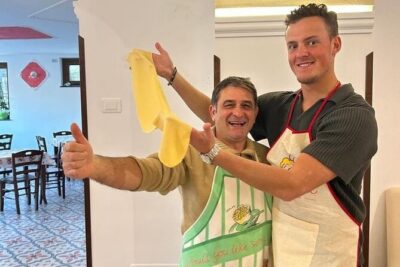
Cooking class with Pasta, mozzarella and Tiramisu with wine
Read our review →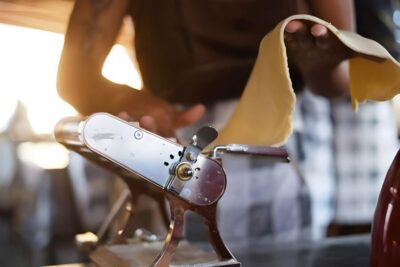
Make Fresh Pasta, Mozzarella & Tiramisù with wine
Read our review →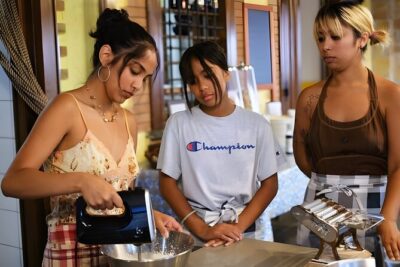
Make Fresh Pasta, Mozzarella, & Tiramisù with Wine
Read our review →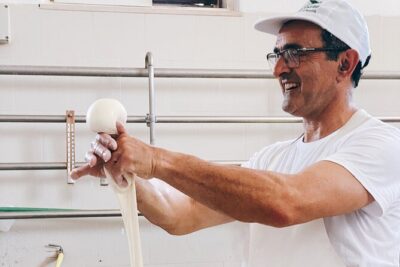
Mozzarella Experience – Cheese Tour and tastings to Masseria Fragnite
Read our review →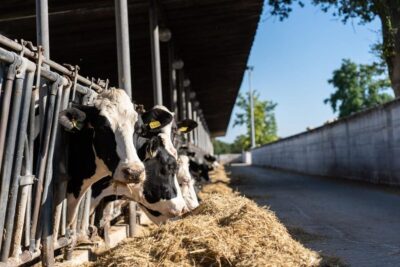
Puglia: Masseria Seppunisi Tour, Cheese, Burrata Tasting
Read our review →
Puglia: Mozzarella Experience at an Apulian Farm
Read our review →