
REVIEW · PARMESAN AND BALSAMIC TOURS
Reggio Emilia: Parmigiano Reggiano & Balsamic Vinegar Tour
Cheese gets serious in Emilia-Romagna. This six-hour outing combines a working Parmigiano Reggiano dairy, cow and calf visits, and a traditional balsamic vinegar producer, making it far more hands-on than a simple tasting. I especially like the chance to watch a cheese wheel being made from milk to maturation, and the generous final spread with three cheese ages, Parma ham, salami, Lambrusco, and balsamic vinegar with vanilla ice cream. The main consideration is the price, $158.60 per person, plus the need for comfortable walking shoes and a willingness to follow the guide by car between nearby stops if you drive yourself.
Claudio Bonoretti leads the tour in English, drawing on his family’s long connection to cheese and balsamic production. His personal style is one of the experience’s biggest strengths: he explains technical steps clearly, keeps the group laughing, and treats the visit like an introduction to his family’s working world. This is a small-group food tour, limited to eight people, but it is not designed for children under 12 or for anyone with mobility limitations.
Key details at a glance
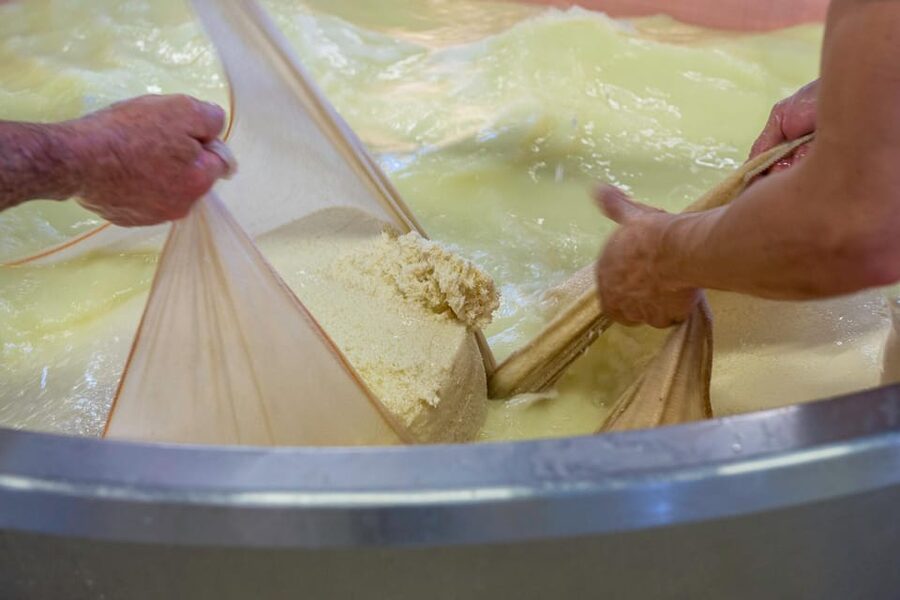
- Watch a wheel of Parmigiano Reggiano being made: You enter the production area during milk processing, cooking, shaping, salting, and maturation.
- Visit the cows and newborn calves: The farm visit adds the animal and agricultural side of cheese production, including a chance to pet very young calves.
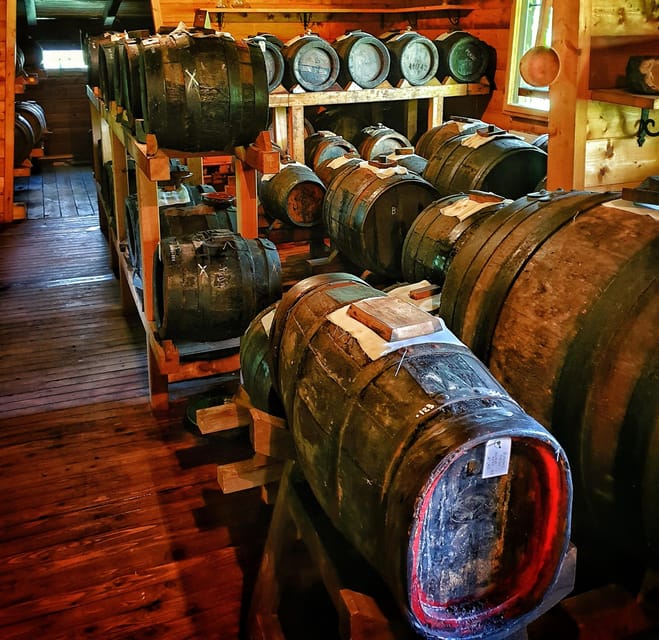
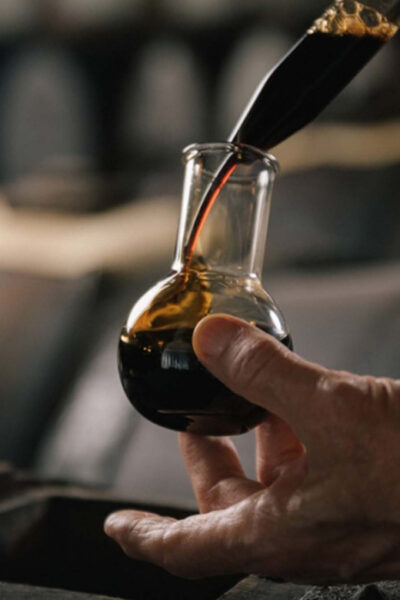
- See a 400-year balsamic tradition: The vinegar stop includes old barrels and tastings of balsamic vinegar aged 8, 15, and 30 years.
- Enjoy a full Emilia-Romagna tasting: Three cheese ages, Parma ham, coppa, salami, Lambrusco, local cake, and vanilla ice cream with aged balsamic are included.
- Take home 400 grams of cheese: Each participant receives a vacuum-packed piece of 24-month Parmigiano Reggiano.
- Use Reggio Emilia as your base: Optional pickup and drop-off at the AV train station make the tour possible without renting a car.
Why this Parmigiano Reggiano tour feels different
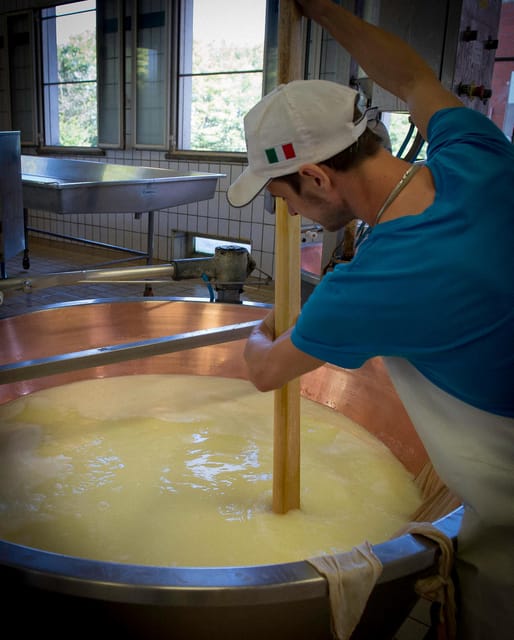
Many food tours stop at a shop, explain a few labels, and hand you a plate. This one takes you into the working process. You see the cheese factory during production, when milk is being heated and transformed into large wheels. That timing matters because you are not looking at a polished display after the work is finished. You are seeing the physical labor and precision behind the product.
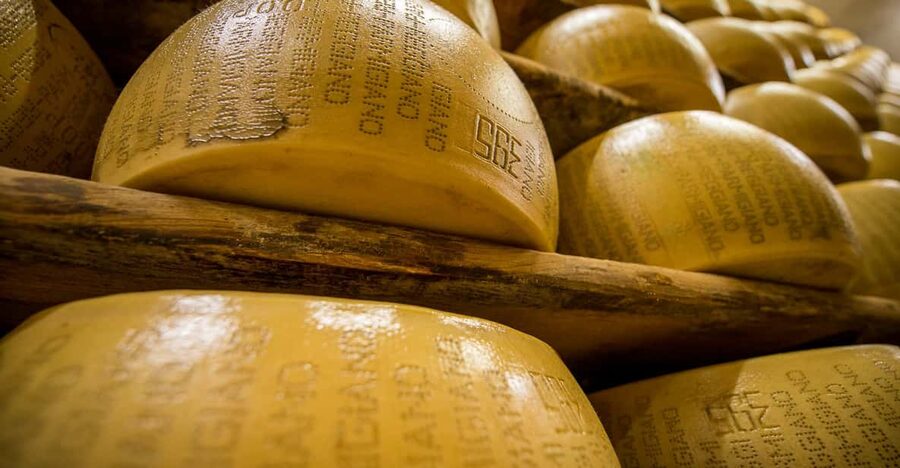
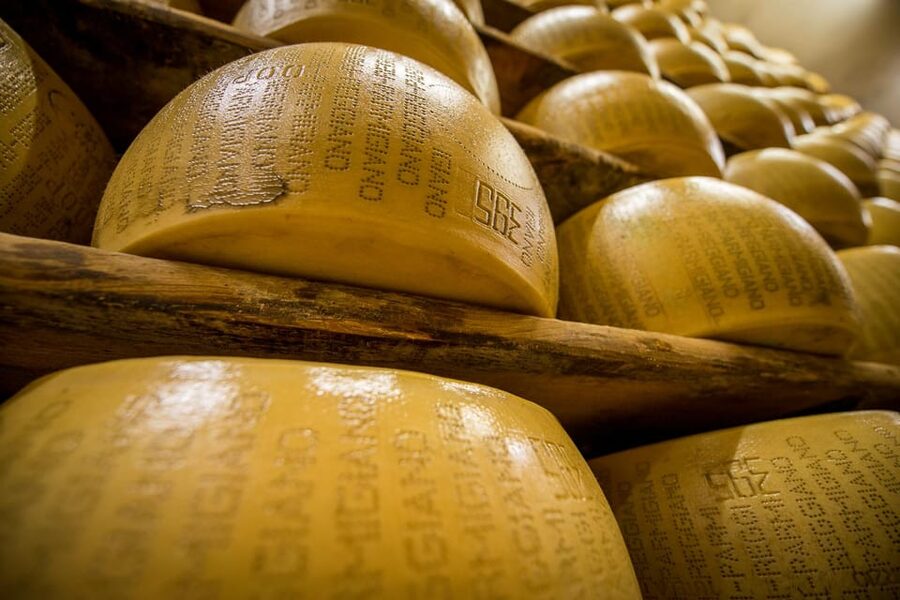
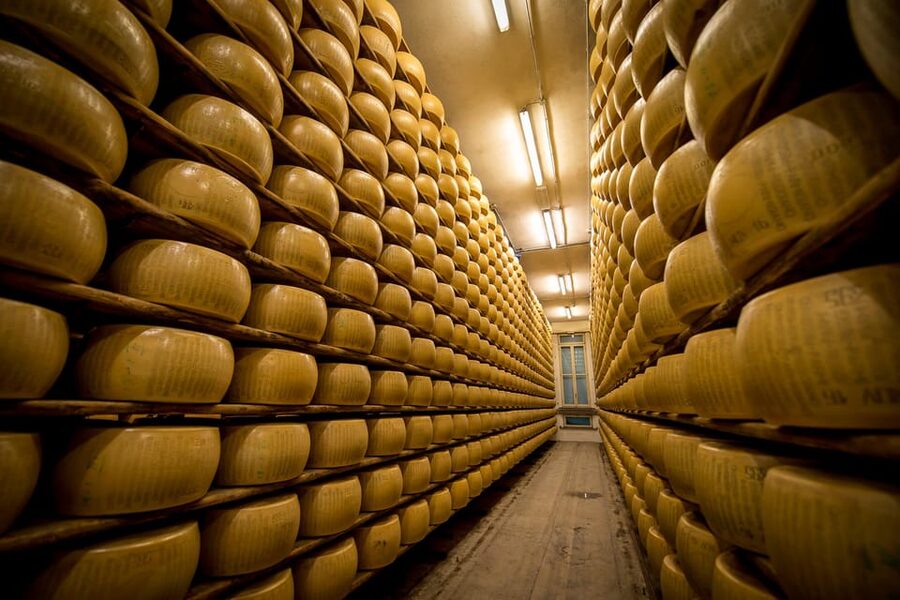
Claudio’s family background gives the visit a personal angle. He was born on a cheese farm and presents the craft as something learned through daily life, not just from a guidebook. His explanations cover the full chain, from cows and milk to the finished wheel stored in long rows.
The small group also helps. With no more than eight participants, you can ask questions without trying to compete with a crowd. The English-language guiding is especially useful here because cheese production involves several specialized steps, and Claudio is praised for making those steps easy to follow while keeping the mood relaxed.
The only caution is that this is a working agricultural setting. You should expect practical clothing, barn and factory surfaces, and some movement between locations. High heels are not allowed, and comfortable shoes are essential.
More Parmesan and Balsamic Tours in Italy:
- Tour Parmigiano Reggiano dairy and Parma ham
★ 5.0 · 601 reviews - Parma: Parmigiano Production and Parma Ham Tour & Tasting
★ 4.9 · 554 reviews - Guided group tour TastyBus: Parmesan Cheese and Parma Ham
★ 5.0 · 241 reviews
Starting with cappuccino and local cake
The day begins at Antico Podere Emilia, where Claudio offers a welcome coffee break. You can have a cappuccino with a sweet and savory cake, including erbazzone, a local specialty associated with Reggio Emilia.
This is a modest but smart beginning. You get a chance to meet the small group, settle in, and hear how the day will work before heading into the production areas. The food also gives you an early taste of regional cooking rather than a generic pastry and coffee.
If you arrive by car, the meeting point is Antico Podere Emilia at Via Carlo Darwin 2 in Reggio Emilia. Free parking is available at each location. You then follow Claudio in your own car for a very short drive of about two minutes to the cheese factory and later stops.
That arrangement is convenient, but it is worth understanding before you book. The tour is not a single-site visit with everyone sitting in one vehicle unless you select the optional minivan transfer. If you drive yourself, you need to remain attentive and follow the group between stops.
Inside the cheese factory during production
The cheese factory is the heart of the day, with about two hours devoted to the guided visit. You receive a lab coat before entering the production area, which is both practical and a useful reminder that this is an active food facility.
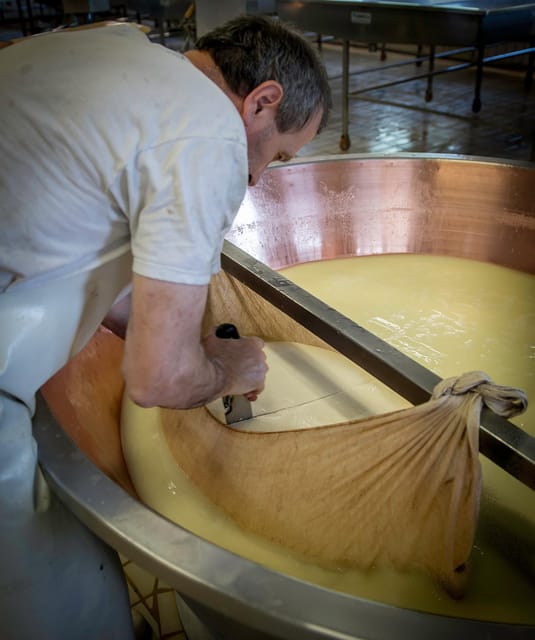
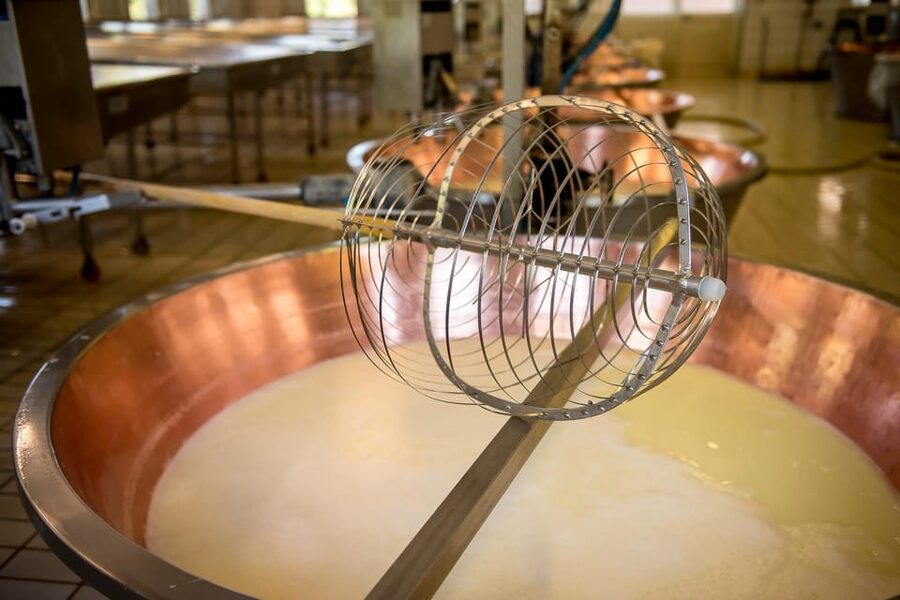
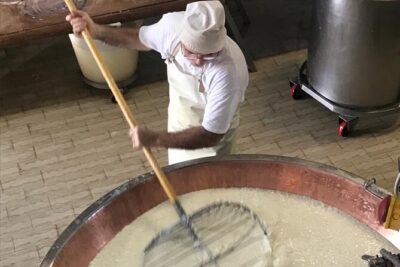
You can watch milk being processed, cooked, and formed into wheels. The appeal is seeing the sequence as one continuous story. The milk is not simply described as an ingredient. You see how it is handled, how the curds are worked, and how the cheesemakers shape the large wheels that later spend months maturing.
The factory workers get a real workout. Producing Parmigiano Reggiano is physical work, and the large copper kettles and heavy cheese forms help you understand why this is a craft built around repetition and strength. Claudio’s explanations connect the machinery and manual work in a way that makes the process easier to remember.
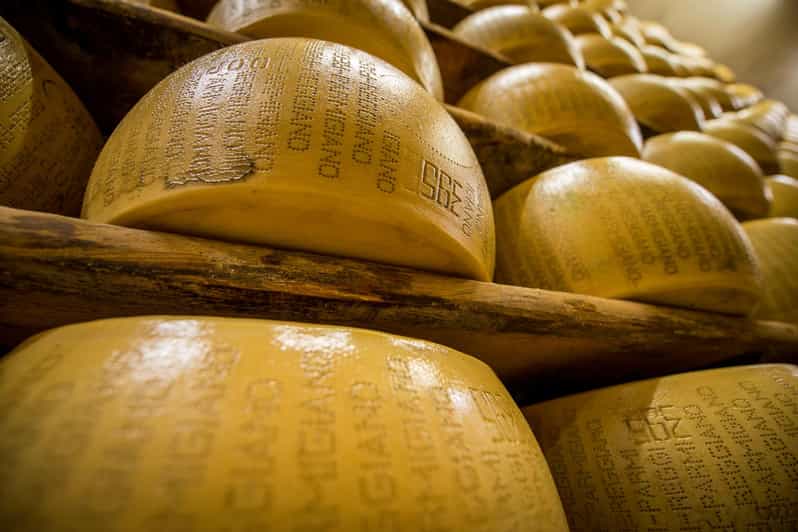
The tour also covers salting and maturation. You then enter the large caveau, where thousands of cheese wheels sit in long rows. This is likely to be one of the most striking parts of the visit. Instead of seeing one finished wheel in a shop window, you see the scale of the aging operation and smell the cheese in the quiet maturation rooms.
You should also expect the caveau to be a sensory part of the tour. The scent is strong, clean, and unmistakably dairy-focused. If you are passionate about cheese, this may be the moment that justifies the trip by itself. If you prefer a short, polished tasting with little factory detail, the two-hour production visit may feel long.
Meeting cows, calves, and the farm behind the cheese
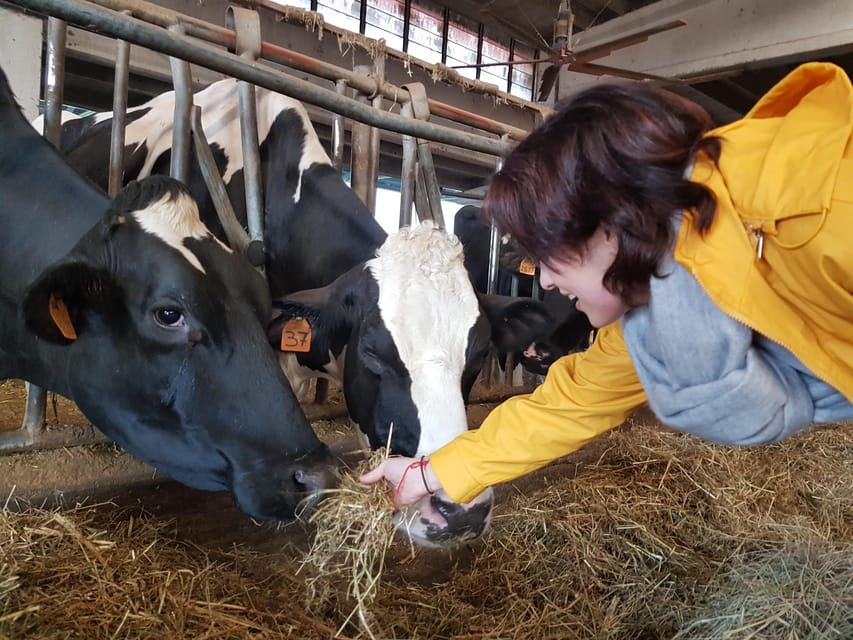
The next stop adds a needed piece of context: the animals. You visit the area where the cows are raised and milked, then see the calves. Claudio says a calf is born almost every day, and you may be able to pet calves only a day old.
That connection between animal care and cheese production is valuable. Parmigiano Reggiano is often treated as a luxury food, but the farm visit shows that it begins with ordinary agricultural work. You see the setting that supplies the milk and get a better sense of the daily rhythm behind the factory.
The tour can also include other farm animals, such as chickens and sheep. These are not presented as a separate attraction, so you should think of them as part of the farm atmosphere rather than a formal animal encounter. Still, they help the stop feel like a working countryside visit instead of an industrial tour.
For families, the calves may sound appealing, but the experience is specifically not suitable for children under 12. It is also not suitable for wheelchair users or people with mobility impairments. Sensible footwear is important because you are visiting a farm and production area, not a museum.
A few more cheese tours around Italy worth a look
- Authentic Farm Tour with Pizza, Cheese, Wine & Limoncello Tasting
★ 5.0 · 698 reviews - Sorrento Farm by Tuk Tuk: Cheese, Limoncello & Hands-On Pizza
★ 5.0 · 628 reviews - Cooking class with Pasta, mozzarella and Tiramisu with wine
★ 5.0 · 549 reviews - Amalfi: Make Fresh Pasta, Mozzarella & Tiramisù with wine
★ 5.0 · 503 reviews
Tasting three ages of Parmigiano Reggiano
After seeing how the cheese is made, you taste the result. The tasting includes Parmigiano Reggiano aged for 12, 24, and 36 months, allowing you to compare texture, flavor, and intensity side by side.
This is one of the most useful parts of the day because it turns the aging process into something you can actually taste. The younger cheese may feel different from the firmer, more pronounced older versions. You can connect what Claudio explains about maturation with the changes on your plate.
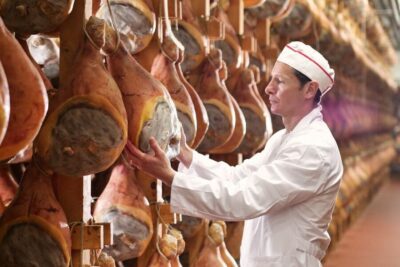
The tasting also includes Parma ham, coppa, and salame nostrano. These products make the meal feel more like a regional snack than a narrow cheese lesson. One glass of DOC Lambrusco and water are included, and the food is substantial enough to function as a light lunch.
Keep your expectations in the right place. This is a tasting, not a long restaurant meal with multiple courses. The food is there to show how local products work together, and the focus remains on Parmigiano Reggiano and balsamic vinegar.
You also receive 400 grams, or about one pound, of 24-month Parmigiano Reggiano in vacuum-sealed packaging. That adds real value to the price, especially if you have room in your luggage for a food souvenir. The sealed packaging makes it much more practical to carry than a loose wedge.
Entering a balsamic vinegar room with 400-year-old barrels
The balsamic portion takes you to a different production site in the Province of Reggio Emilia. Here the pace changes. Instead of large cheese kettles and rows of wheels, you see a quieter aging tradition built around wooden barrels.
The factory contains barrels said to be 400 years old. Their age is not just decoration. It gives you a sense of how traditional balsamic vinegar depends on time, gradual concentration, and careful storage rather than a quick industrial process.
Claudio explains how the vinegar ages, then guides you through a tasting of 8-year, 15-year, and 30-year balsamic vinegar. The comparison is useful because balsamic can vary greatly in sweetness, thickness, acidity, and finish. Tasting several ages in sequence helps you understand why older traditional vinegar commands a higher price.
The final taste pairs 30-year DOP balsamic vinegar with vanilla ice cream. It sounds unusual until you try it, and it is a memorable way to close the food portion of the tour. The sweetness of the ice cream gives the vinegar a different role, showing that traditional balsamic is not limited to salads or savory dishes.
This stop is also a good counterpoint to the cheese factory. You see one food made through active daily production and another shaped by patient aging. Together, they explain why Emilia-Romagna is such an important region for Italian food culture.
How the six-hour schedule works
The full experience lasts about six hours, although the exact starting and ending times can change. The listed sequence includes:
- A 30-minute welcome breakfast at Antico Podere Emilia
- About two hours at the cheese factory
- A 30-minute guided farm or production stop on Via dell’Inferno
- A 30-minute tasting with wine, cheese, and local foods
- A 45-minute guided visit connected with balsamic production
- A 20-minute final food tasting
- Return to the meeting point or one of the listed drop-off locations
The schedule has a comfortable rhythm. You are not standing in one factory all day. Food breaks separate the technical explanations, and the move from cheese to cows to balsamic keeps the subject fresh.
Still, six hours is a serious commitment. I would not place this tour next to a tightly scheduled museum visit or an important train departure. The tour provider notes that pickup and ending times can shift, and train delays cannot be accommodated. Build in plenty of spare time.
Reaching the tour from Reggio Emilia or Modena
You can meet at Antico Podere Emilia if you arrive by car. Free parking is available at the locations, and you follow the guide’s vehicle for the short transfers.
An optional round-trip minivan transfer is available from Reggio Emilia AV train station. Claudio picks you up in a gray, air-conditioned minivan at the main exit, near the café bar or the roundabout in front of the station, depending on the station instructions provided for your booking.
This makes the tour particularly useful if you are staying in Modena or Bologna and prefer not to rent a car. A direct train from Bologna to Reggio Emilia is possible, and the train ride from Modena is short, but you should contact Claudio before purchasing your ticket. The pickup time can change slightly, and he asks you to arrive at least 30 minutes early.
If your train is delayed, the minivan cannot wait for the group. You would need to reach the tour by taxi, so this transfer works best when you build in a generous buffer. That is a small inconvenience, but an important one.
Is $158.60 a fair price?
At $158.60 per person, this is not a budget food stop. The value depends on how much you want to see behind the products.
You receive six hours of guiding, a cheese factory visit during production, a farm and calf visit, a balsamic facility with historic barrels, several tastings, a welcome coffee break, a glass of Lambrusco, local cured meats, and a vacuum-sealed 400-gram piece of Parmigiano Reggiano. Optional transport adds convenience if you are arriving by train.
I consider the price reasonable for someone who wants access to working producers and a personal guide rather than a brief commercial tasting. The small group is another plus. Claudio’s family connection, humor, and clear explanations are repeatedly described as central to the experience, and those qualities are hard to price but important on a long food tour.
The value is weaker if you only want to sample cheese and vinegar. You would be paying for the factory access, farm visit, transportation logistics, and several hours of explanation. This tour rewards curiosity more than speed.
Who should book this experience?
I would choose this tour if you care about how food is made, enjoy meeting a local guide with a family connection to the trade, and want a full day away from city sightseeing. It suits couples, friends, and small groups who like tasting several versions of the same product and asking questions.
It is also a strong choice if you are based in Modena or Bologna and want to use the train instead of renting a car. The optional pickup removes much of the usual rural transport problem, provided you confirm the train and pickup details in advance.
I would skip it if you dislike farms, food production, or extended explanations. The experience includes active work areas, animal facilities, and multiple transfers. It is not suitable for children under 12, wheelchair users, or people with mobility impairments.
Cancellation is flexible up to 24 hours before the tour for a full refund, and you can reserve now and pay later. Comfortable shoes are required. Pets, smoking in the vehicle, high heels, food and drinks in the vehicle, and electric wheelchairs are not allowed.
FAQ
How long does the Parmigiano Reggiano and balsamic vinegar tour last?
The tour lasts about six hours. Starting and ending times can change, so confirm the schedule before arranging train connections.
Where does the tour start if I arrive by car?
The meeting point is Antico Podere Emilia at Via Carlo Darwin 2, 42123 Reggio Emilia. Free parking is available at each location.
Is train station pickup available?
Yes. Optional round-trip pickup and drop-off are available at Reggio Emilia AV train station in an air-conditioned minivan.
Can I take a train from Bologna or Modena?
Yes, the tour can be reached by train to Reggio Emilia, but you should contact Claudio before buying your ticket because pickup and tour times may change.
What food and drinks are included?
You receive a welcome cappuccino, erbazzone cake, three ages of Parmigiano Reggiano, Parma ham, coppa, salami, one glass of DOC Lambrusco, water, three ages of balsamic vinegar, and vanilla ice cream with 30-year DOP balsamic vinegar.
Do I receive cheese to take home?
Yes. Each participant receives 400 grams, or about one pound, of 24-month Parmigiano Reggiano in vacuum-sealed packaging.
Is the tour offered in English?
Yes. Claudio provides live guiding in English.
Is the tour suitable for children?
No. The experience is not suitable for children under 12.
What should I wear?
Wear comfortable shoes. High heels are not allowed, and practical footwear is important for the farm and cheese-production areas.
Should you book it?
Book this tour if you want the working side of Emilia-Romagna food culture, not just a plate of samples. The combination of cheese production, cows and newborn calves, old balsamic barrels, comparative tastings, Lambrusco, and a take-home piece of Parmigiano Reggiano gives the day plenty of substance.
The strongest reason to go is Claudio himself. His family connection and relaxed teaching style make complicated food traditions approachable. Confirm your transport plans, allow extra time around the train, and wear shoes built for a farm. If those details suit you, this is a thoughtful and unusually personal way to understand two of Italy’s most famous foods.
Just added around Italy
- Wine Tasting with Cured Meats & Cheeses in Florence★ 5.0 · 2 reviews
- Vico Equense: Tour in the dairy “Mozzarella Experience”★ 5.0 · 19 reviews
- Tuscany: Ripalte Design Winery Wine and Cheese Tasting Tour★ 4.7 · 15 reviews
- From Parma/Cinque Terre: Truffle & Parmesan Picnic (Tasting)★ 5.0 · 2 reviews
- Turin: Gastronomy tasting through oil, wine and cheese★ 5.0 · 2 reviews
- Full Day Prosecco and Cheese Tasting from Venice★ 5.0 · 9 reviews
- Premium Cheeses and Gins Tour in the Prosecco hills. Full lunch!★ 5.0 · 3 reviews
- The Valpolicella food & wine driving tour: cheese factory+ winery★ 5.0 · 6 reviews
Parmesan and Balsamic Tours, compared.
Parmigiano Production and Parma Ham Tour & Tasting
Read our review →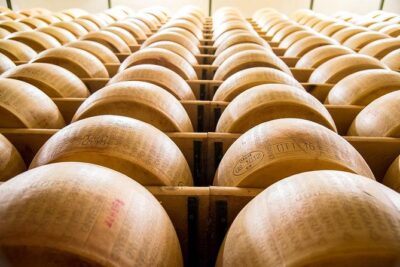
Guided group tour TastyBus: Parmesan Cheese and Parma Ham
Read our review →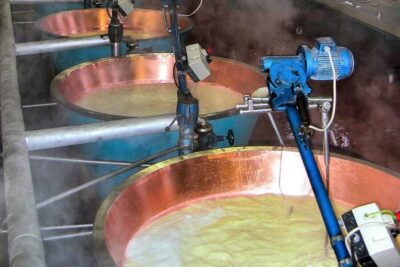
Cheese, Ham, & Balsamic Vinegar Tour with Tastings
Read our review →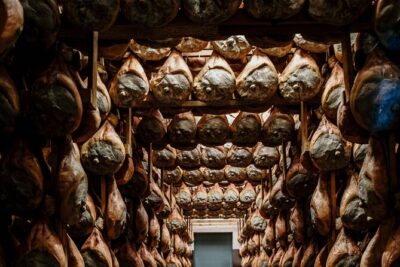
Private Full Day Parma Food Tour: Parmesan Cheese, Parma Ham, Lunch, Vinegar
Read our review →Browse the lists this tour appears in